
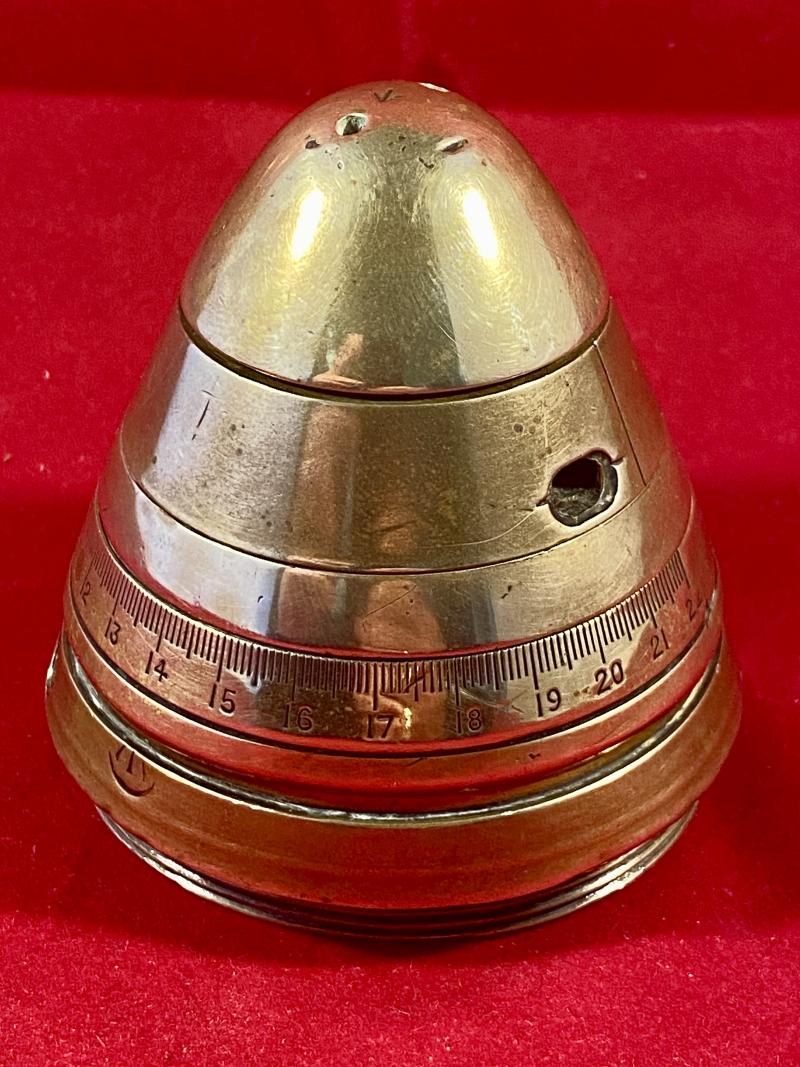
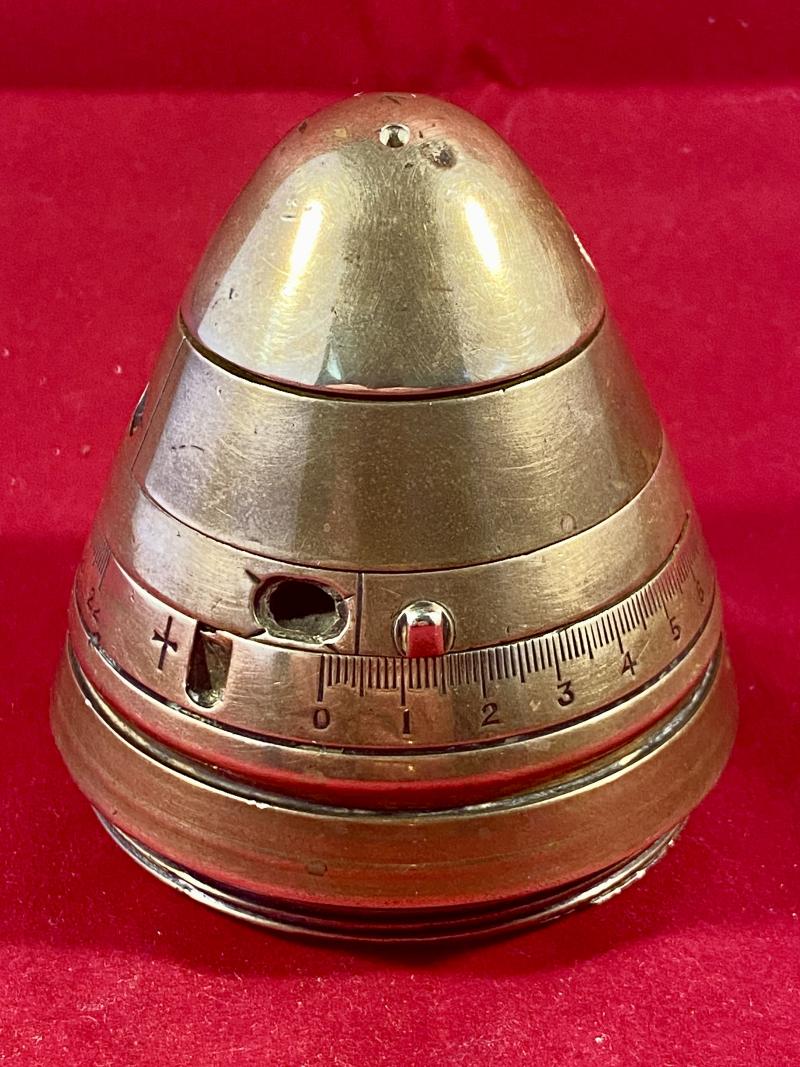
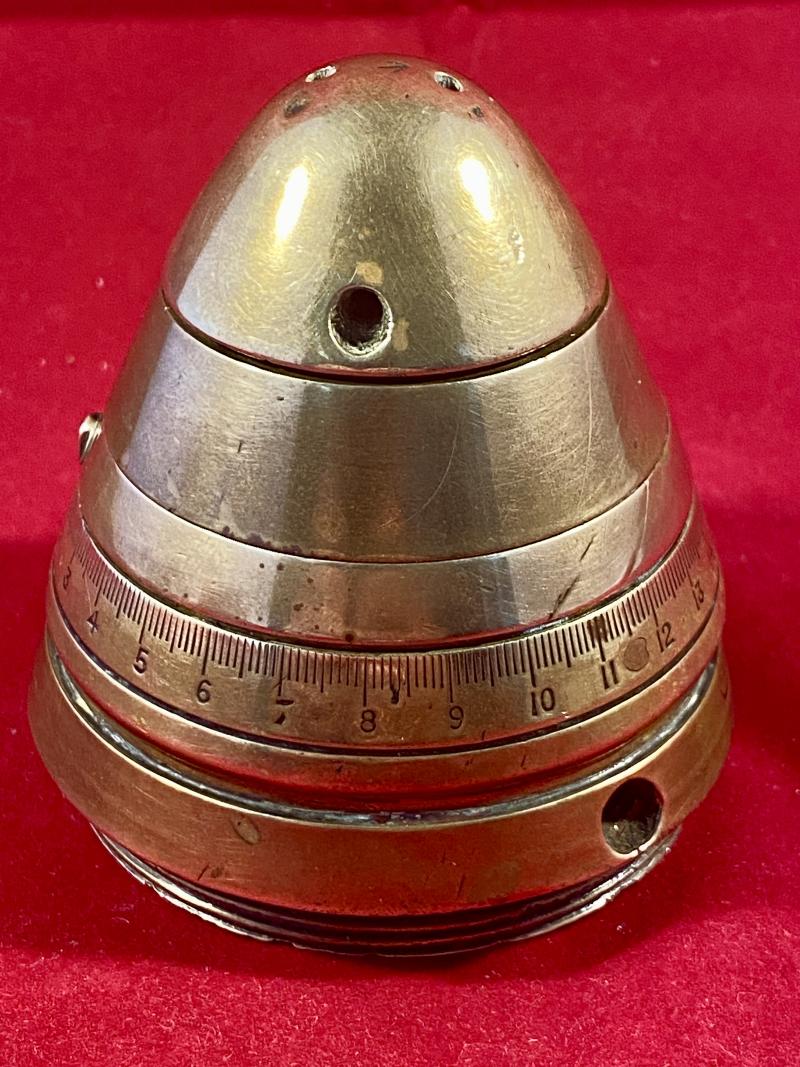
INERT WW1 British No 80 Shrapnel Shell Brass Fuse Head Dated June 1917
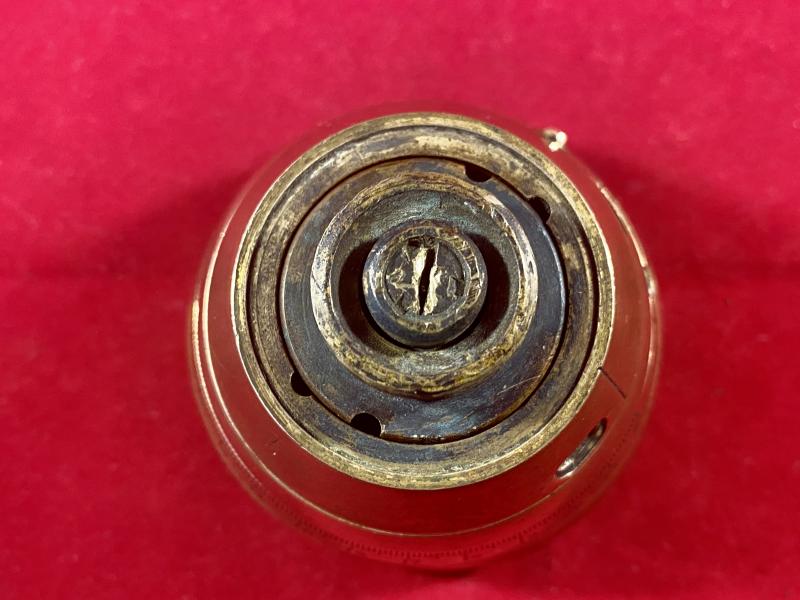
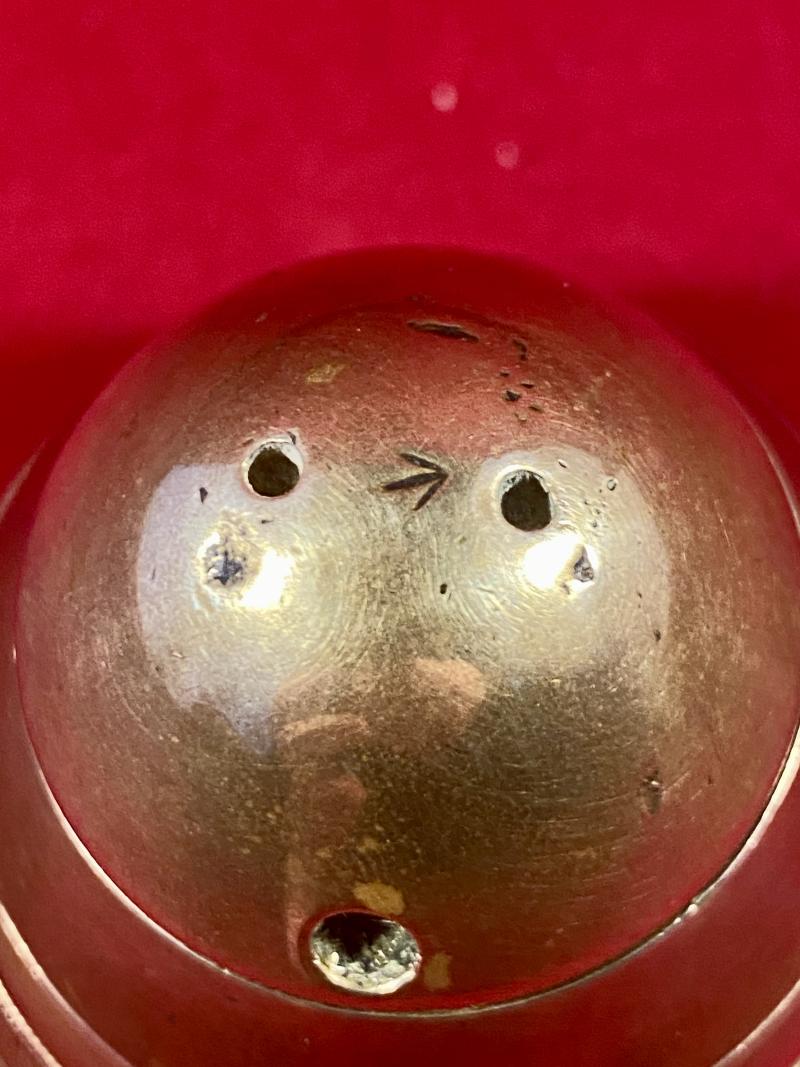
Here on offer is a fine example of an INERT WW1 British No 80 shrapnel shell fuse head, dated to June 1917.
The fuse itself has been fired but is now INERT and was recovered from the battlefields of France and now makes a great desk ornament or paperweight.
The No.80 fuse was known as a time and percussion fuse and was usually used with the British shrapnel shells of the famous 18 pounders field guns in WW1. Designed by the German company Krupp in 1905 and manufactured under license, by Vickers Armament Industries in England before and during WW1.
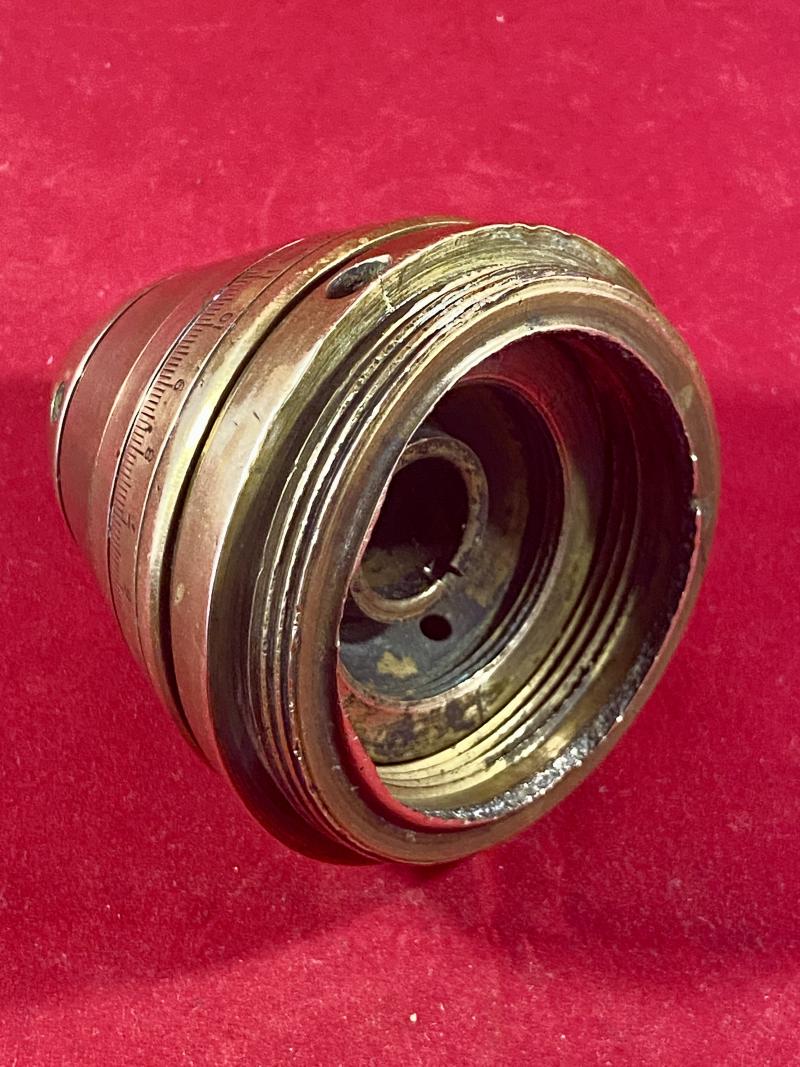
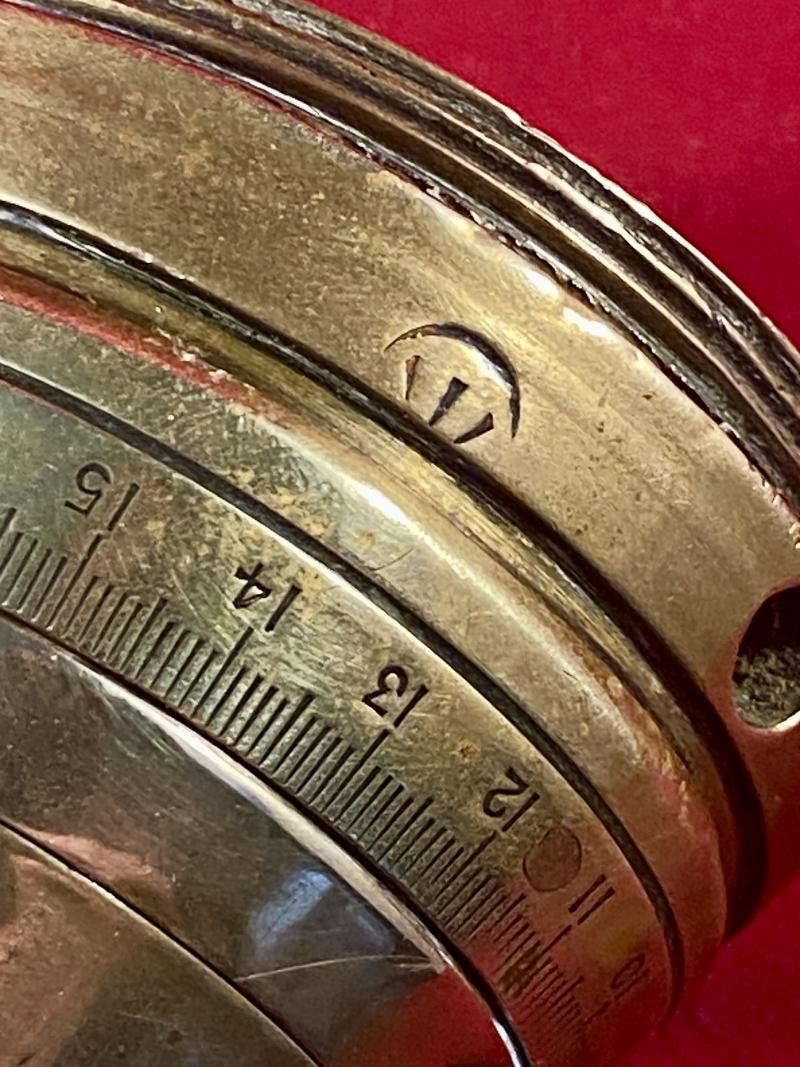
Although the initial models were made in aluminium, this fuse was entirely made in brass. The time system is a classical rotating disk system, with a ring graduated from 0 to 22 seconds, a departure ignition caused by an axial time pellet caused by the discharge shock momentum. The percussion system, selectable by choosing the rotating disk graduation marked with a roman cross was a very classical one as well, of graze type, with a staple safety device actioned by the shell departure shock.
A gunpowder load was placed at the base of the fuse to ignite the shell (with an additional detonator if needed).
This type of fuse had 16 different versions and remained in service until the middle of WW2.
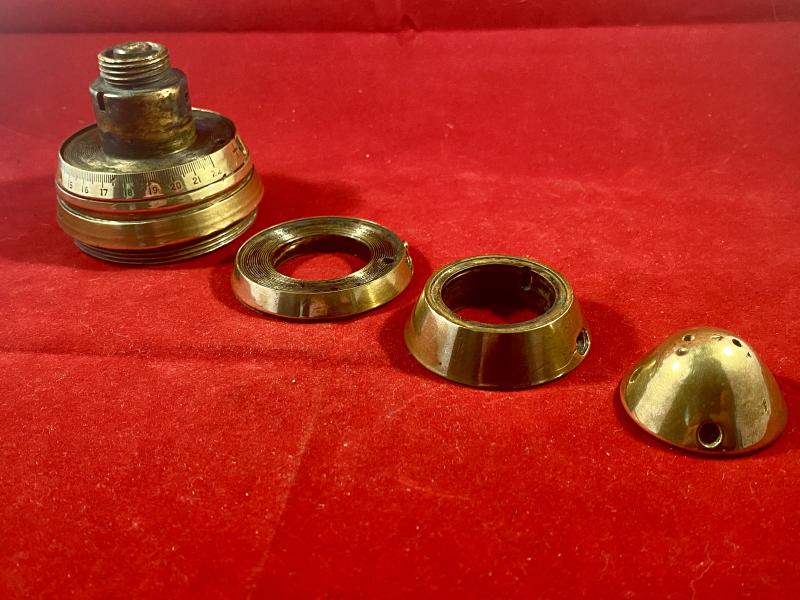
The top section of this example does still take apart but the lower main thread has been slightly distorted during its firing in WW1.
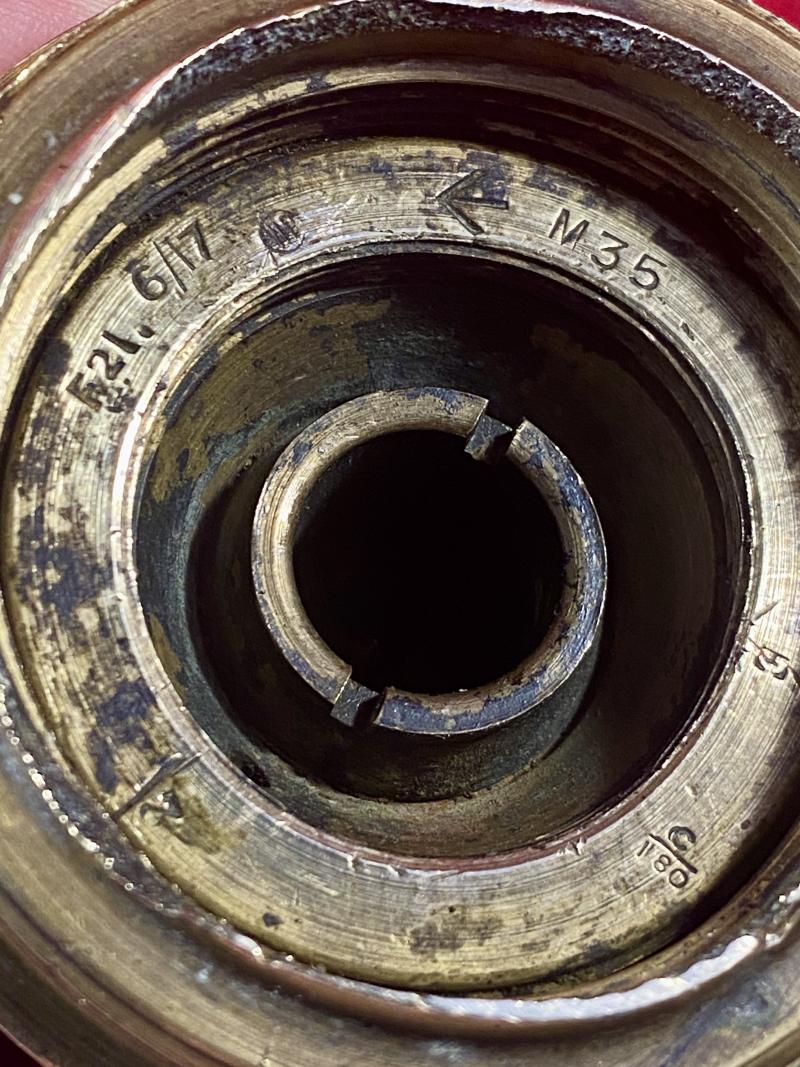
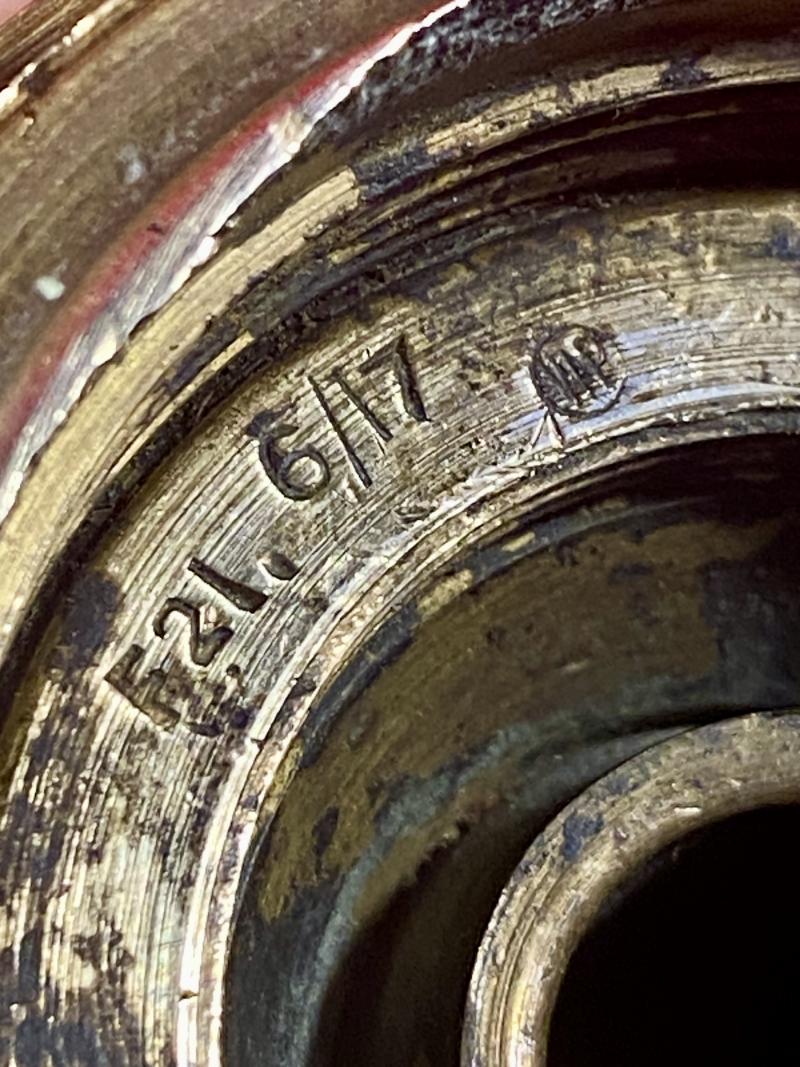
Inside the base it is stamped with what I think is the makers mark, WP, the date 6/17 and various other ordnance markings, M35, F21 and a broad arrow.
It measures 2.6” (6.8cm) diameter and is 2.75” (7cm) high from the treaded base to the top of the cone.
It weighs a heavy 815g.
Please see my pictures for the details of the condition, which complement this description.
Please see my TERMS OF BUSINESS regarding Deliver Charges and Insurance regarding additional insurance cover, should you require it, BEFORE the item is dispatched.
The responsibility lies with the customer to check with your Customs restrictions that this item can be imported into your country.
Code: 51306