
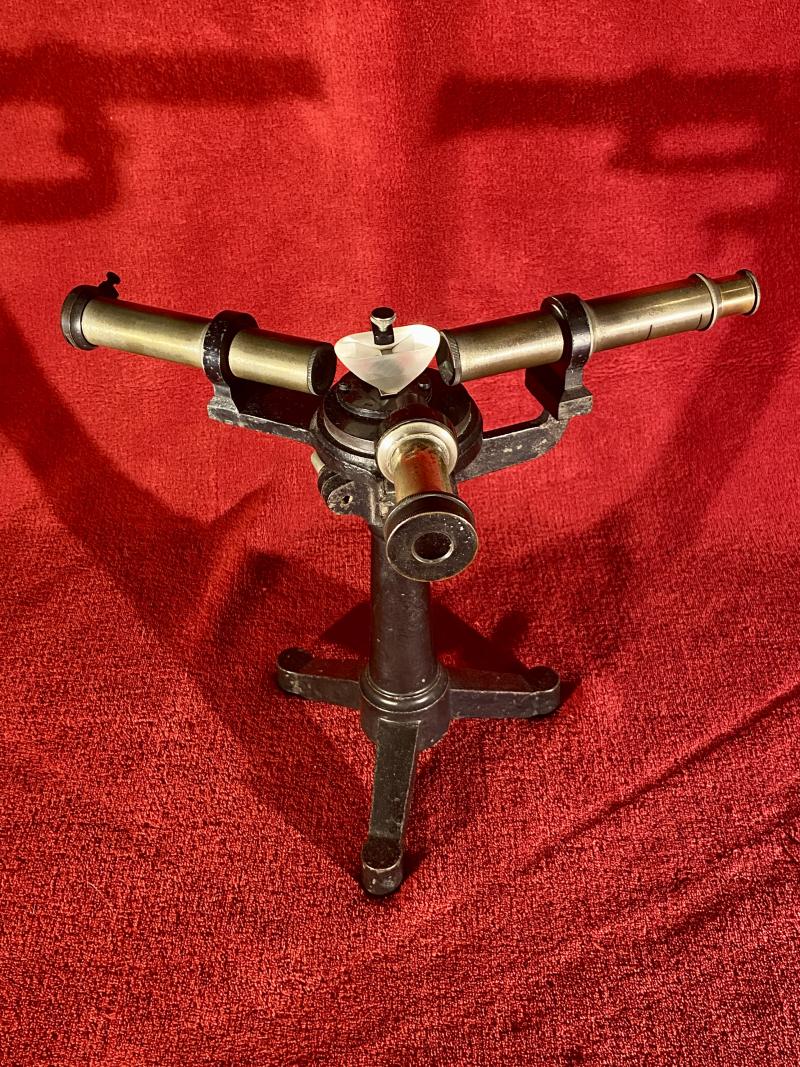

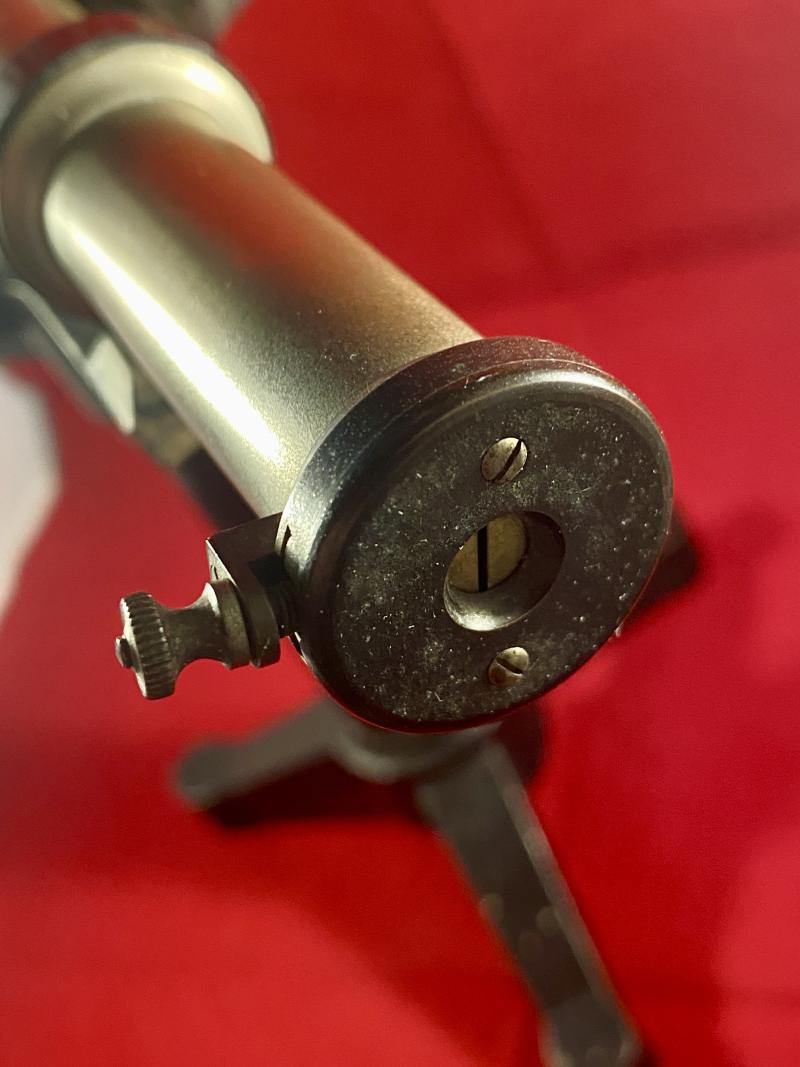
Rare Antique Scientific - Compound Spectroscope c1870
Here on offer is a rare example of an antique compound spectroscope, circa 1870.
I can’t find any maker’s mark or name on this piece and it is proving hard to find another such example?
I did however find reference to one is a book called:
Spectrum Analysis in its Application to Terrestrial Substances, and the Physical Constitution of the Heavenly Bodies
This book was translated from the second enlarged and revised German edition by Jane and Caroline Lassell; edited with notes by William Huggins; with numerous woodcuts and coloured plates and published in 1872.
There is an illustration of a man looking through a spectroscope in fig 52, on page 127 of the book. I show this image in the very last photo on the “Extra photos” under item 51617.
The text that goes with the picture states the following: the three tubes are directed to the prism at different angles, as in that constructed by Kirchhoff and Bunsen. The eye of the observer is placed in the axis of the telescope directed to that surface of the prism from which the light emerges in the form of the spectrum; the opposite surface of the prism receives through the slit and collimating lens the light emitted from the object to be examined; at the side of the observer is the tube carrying the illuminated scale, or the micrometre screw, so that the mark coinciding with any division of the scale may be placed on any line of the spectrum.
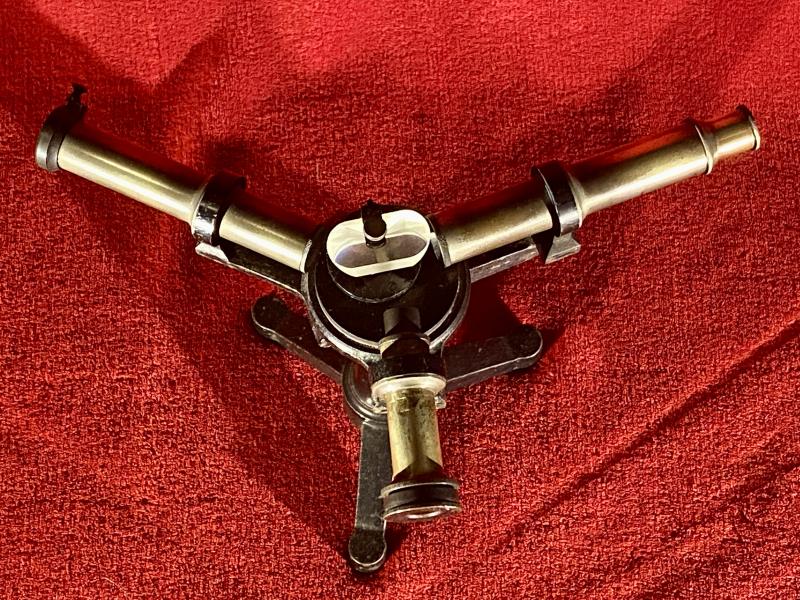
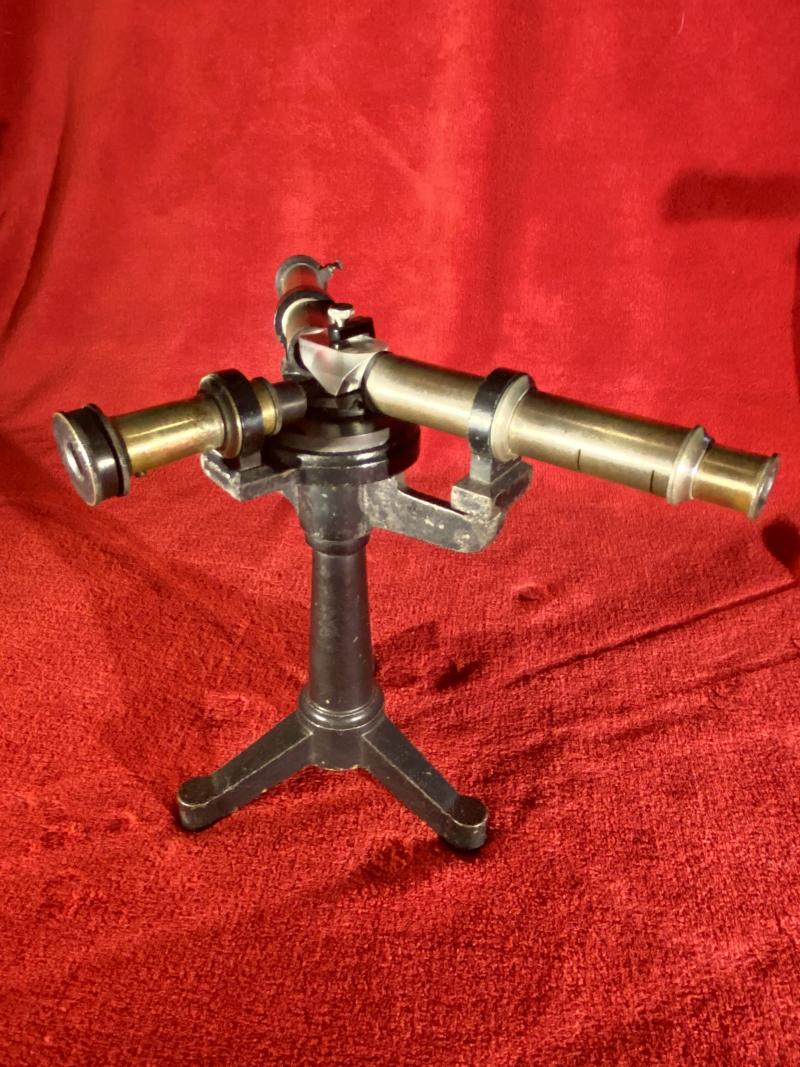
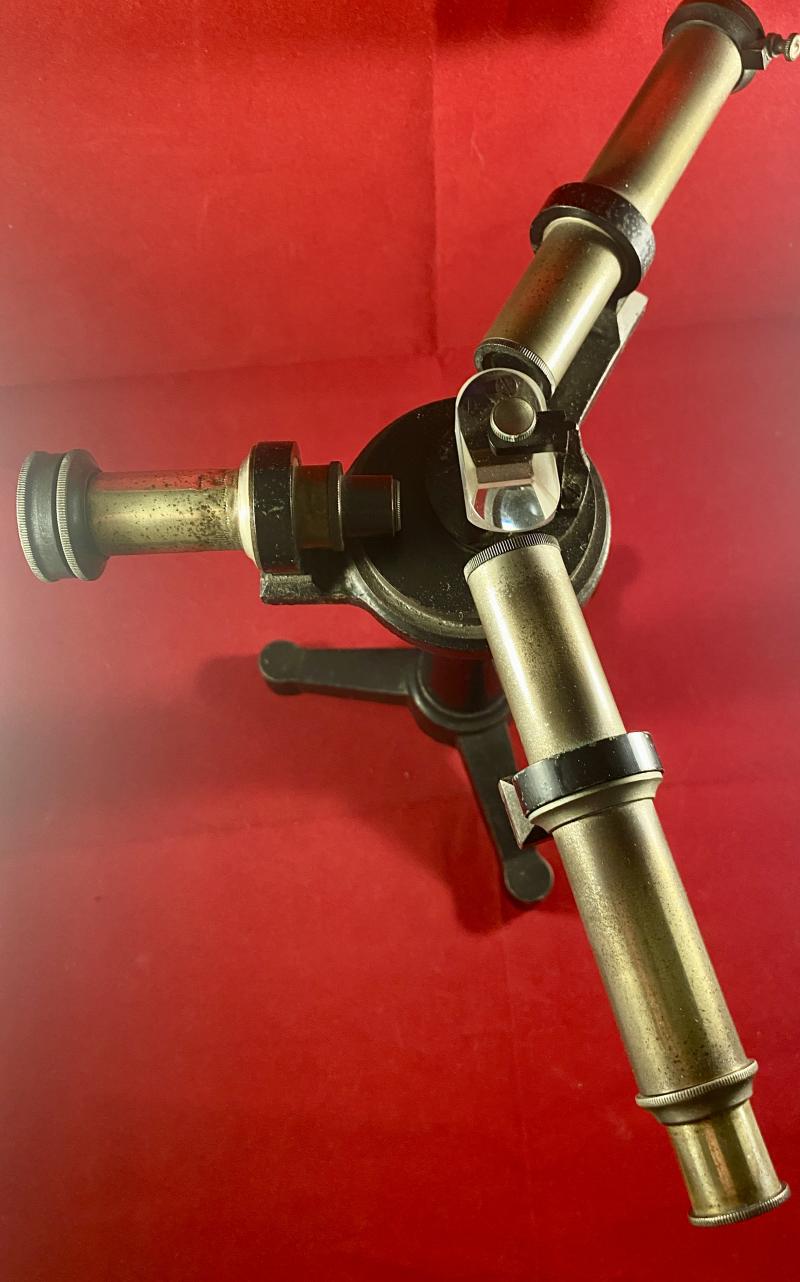
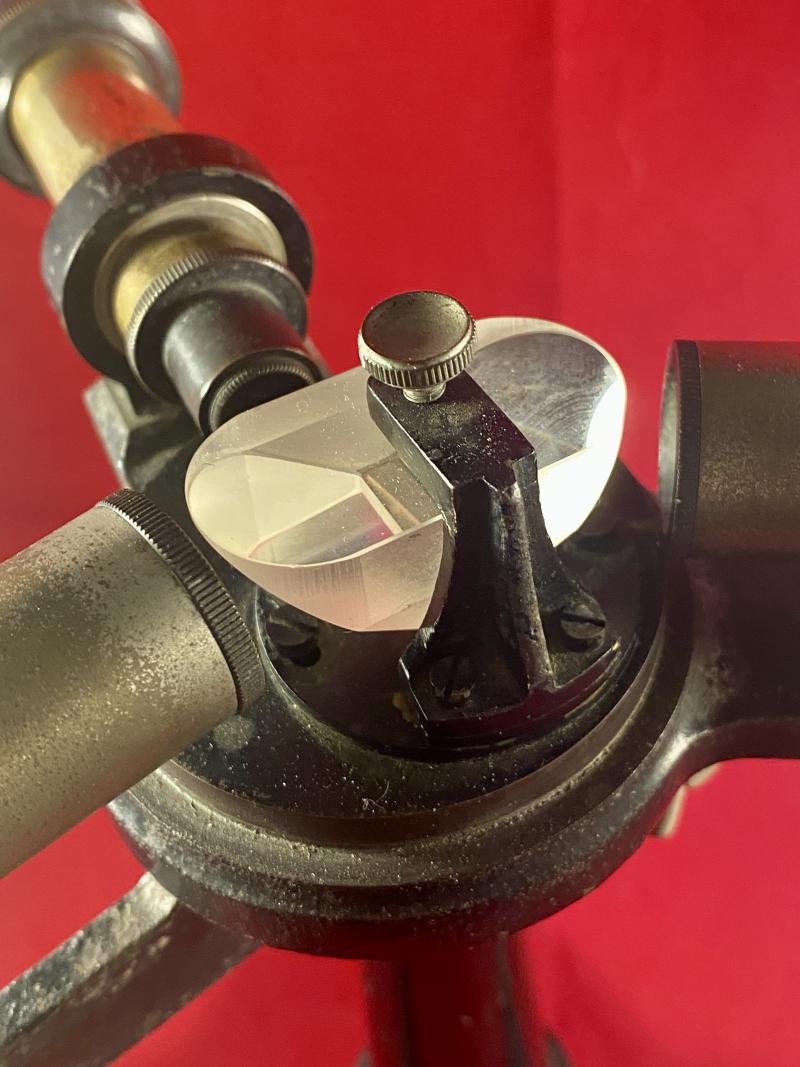
This Spectroscope is in the style of the original Bunsen-Kirchhoff design. The precision cut glass prism sits on the top of a cast iron raised platform and is held in place by a metal arm and knurled screw. The platform is supported by a single cast iron pole with three feet at the base.
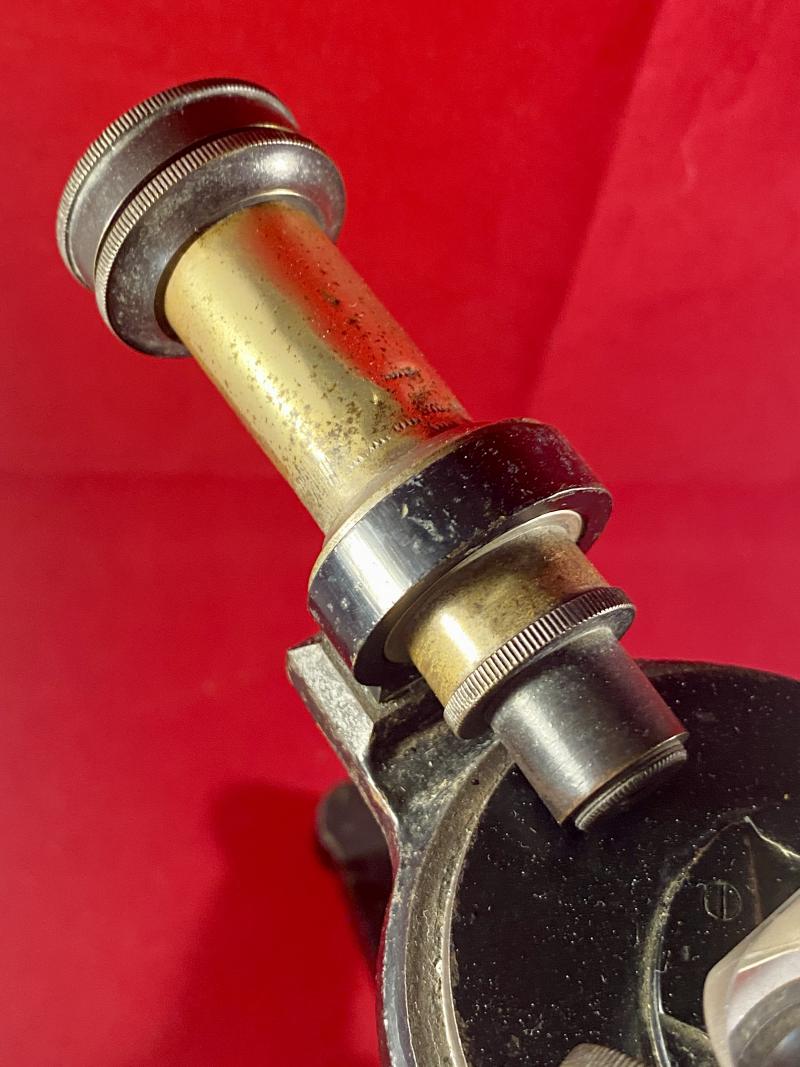
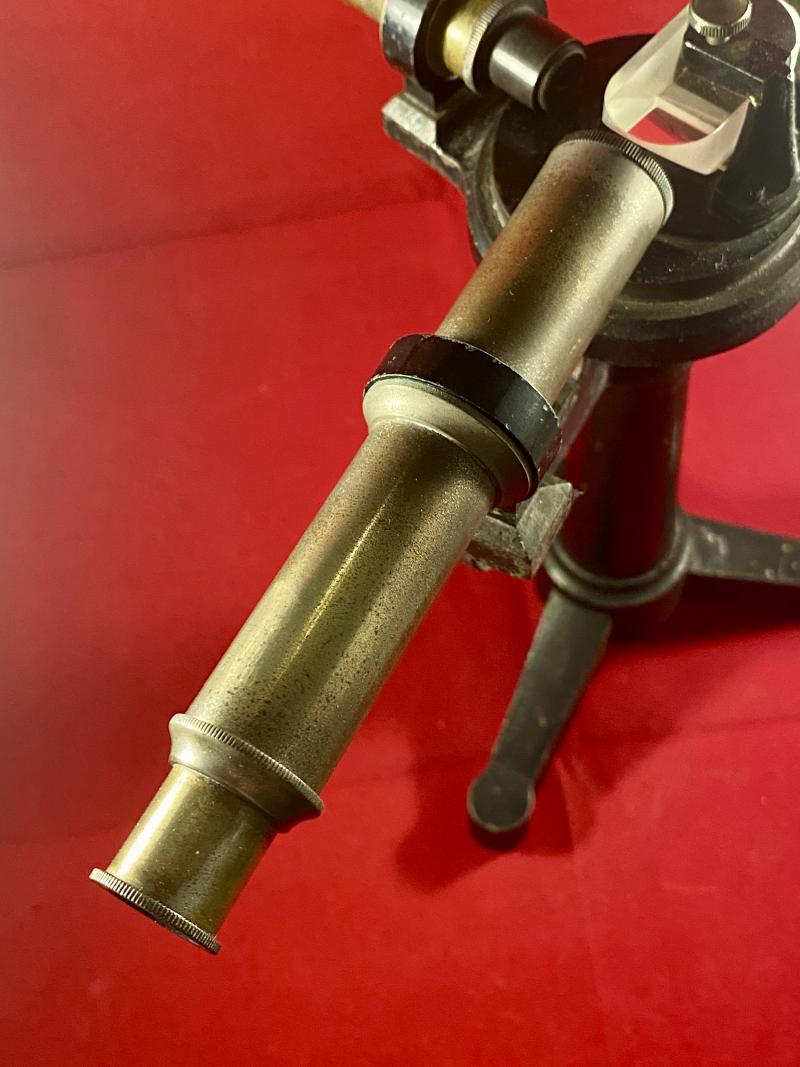
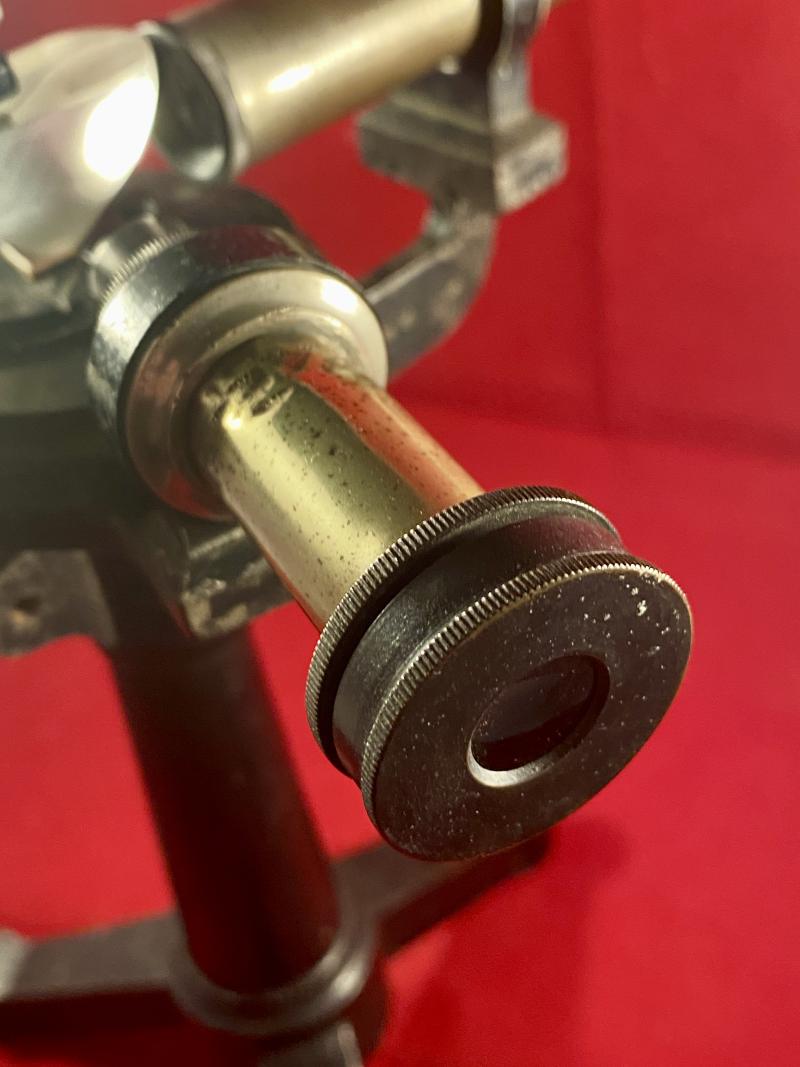
Three brass cylindrical tubes are screwed in place on the platform and extend outwards.
The first tube is a telescope for viewing, the second tube is the scale telescope and the final tube is the collimator which allows light into the system, a slit at the end of the tube can be opened and closed using a micrometre screw mechanism.
A spectroscope filters light through a narrow slit, dispersing the light into a visible spectrum. The earliest spectroscope was invented by Robert Bunsen and Gustav Kirchhoff in Germany in 1859, and their basic design was not substantially altered until the introduction of the mass spectrometer in 1919.
This fine example seems to have all its components in place and the lens are clear and undamaged. The only issue I can see is the viewing tube has a slight curve and surface dents where I think it has been dropped at some point, bending it slightly. This could be straightened without too much trouble if so required.
All the brass fittings now have a nice age patina and the blackened cast iron stand and platform are in excellent condition.
This is a rare and early example of a spectrometer that is museum quality and makes a wonderful scientific instrument display piece.
It measures approximately 6” (15.3cm) wide at the base, 11.5” (29.3cm) across the top and is 9.5” (24cm) tall.
It weighs a heavy 2.4Kg.
Please see my pictures for the details of the condition, which complement this description.
Please see my TERMS OF BUSINESS regarding Deliver Charges and Insurance regarding additional insurance cover, should you require it, BEFORE the item is dispatched.
The responsibility lies with the customer to check with your Customs restrictions that this item can be imported into your country.
Code: 51618