WW2 Period Royal Navy Admiralty Pattern 301B Alloy Scales Clasp Knife by Harrison Fisher & Co Ltd of Sheffield – Named to C. Clayton
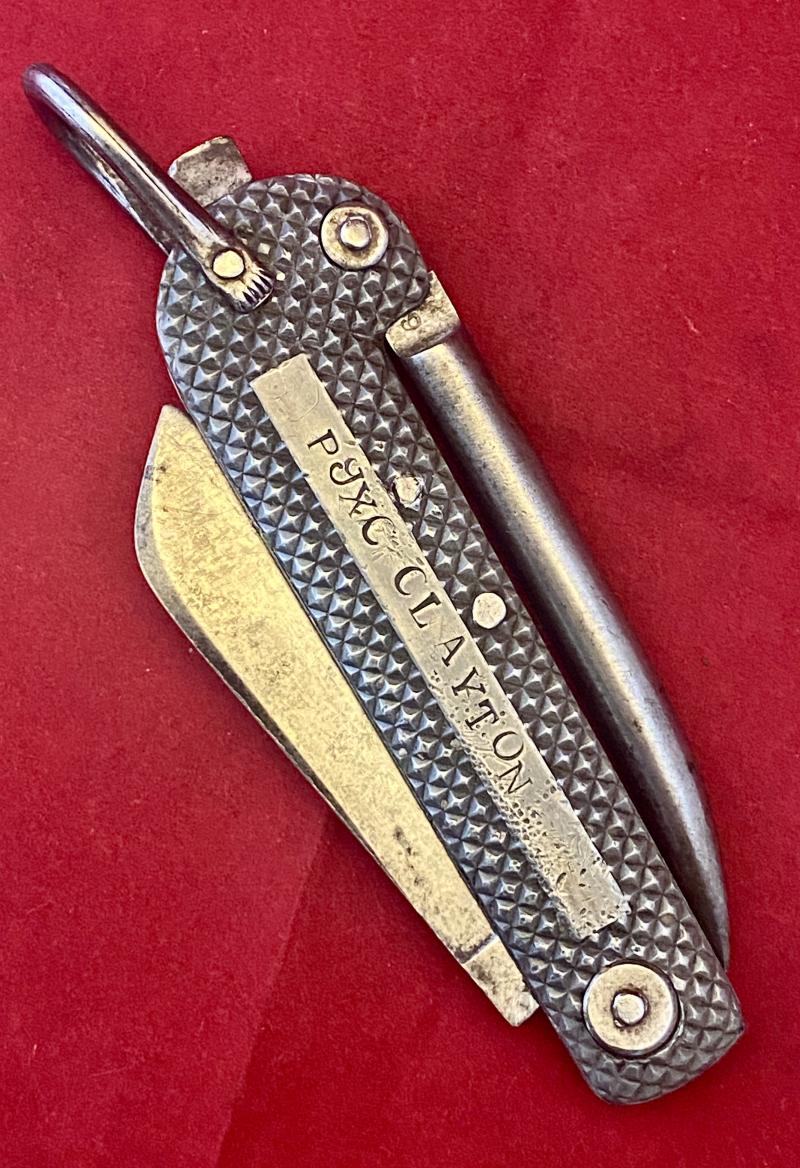
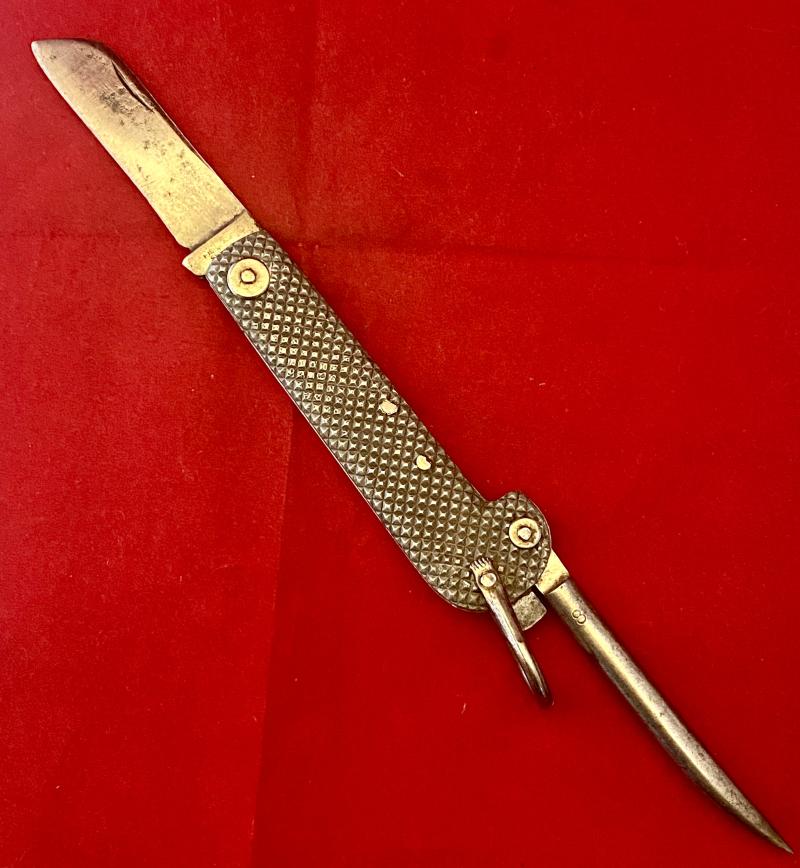
Here on offer is a genuine WW2 period Royal Navy Admiralty Pattern 301B alloy scales clasp knife, by Harrison Fisher & Co Ltd of Sheffield.
My understanding is that alloy scales replace the original staghorn specified by the original Admiralty Pattern 301 knife.
Also known as the pusser’s dirk this was issued to seamen as Admiralty pattern 301, with horn scales from 1910 to 1937 when it became 301B with alloy scales.
Stainless steel, invented in 1914, was not really hard enough for knives before the 1940s; the Royal Navy carried on issuing its carbon steel clasp knife until the 1980s.
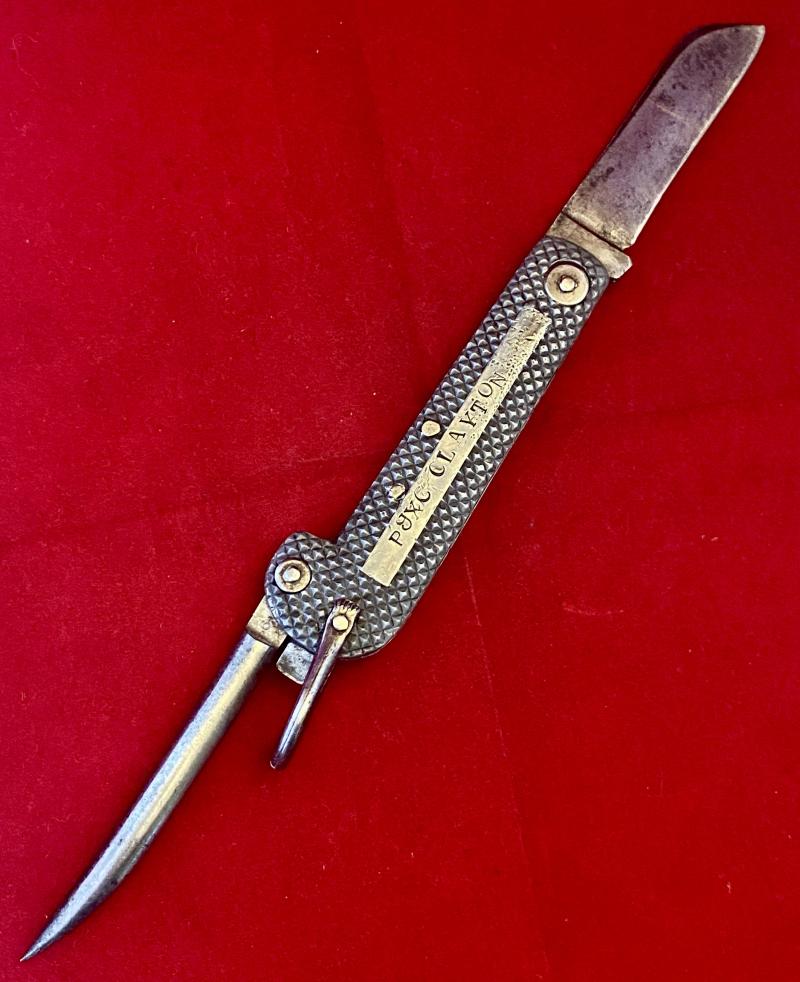
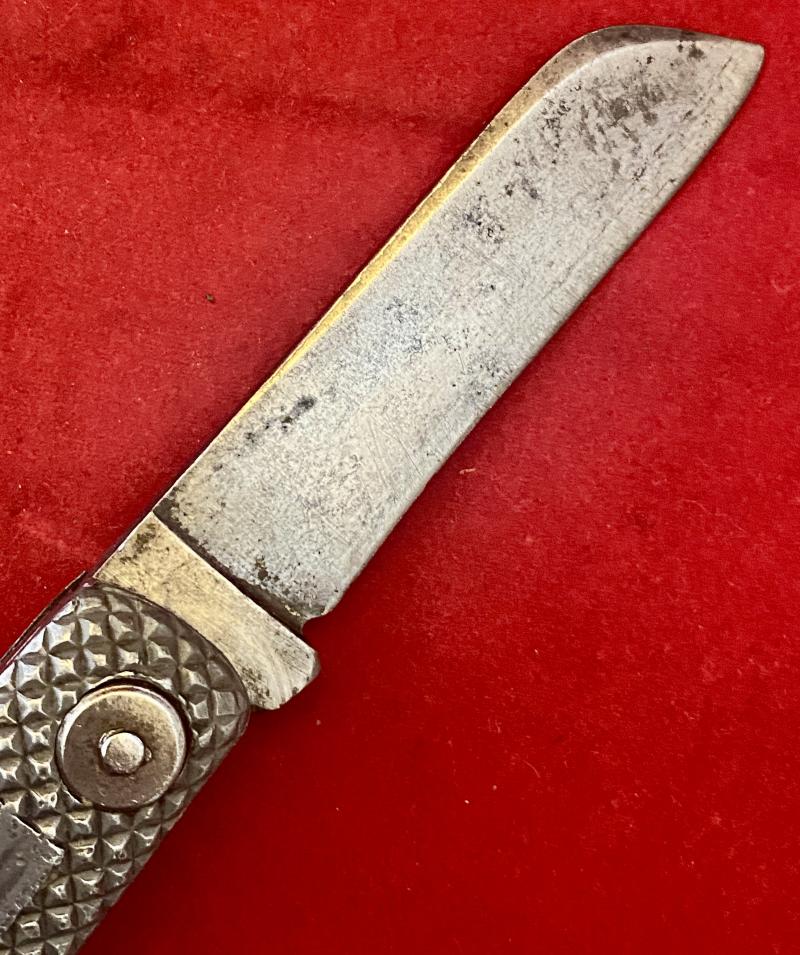
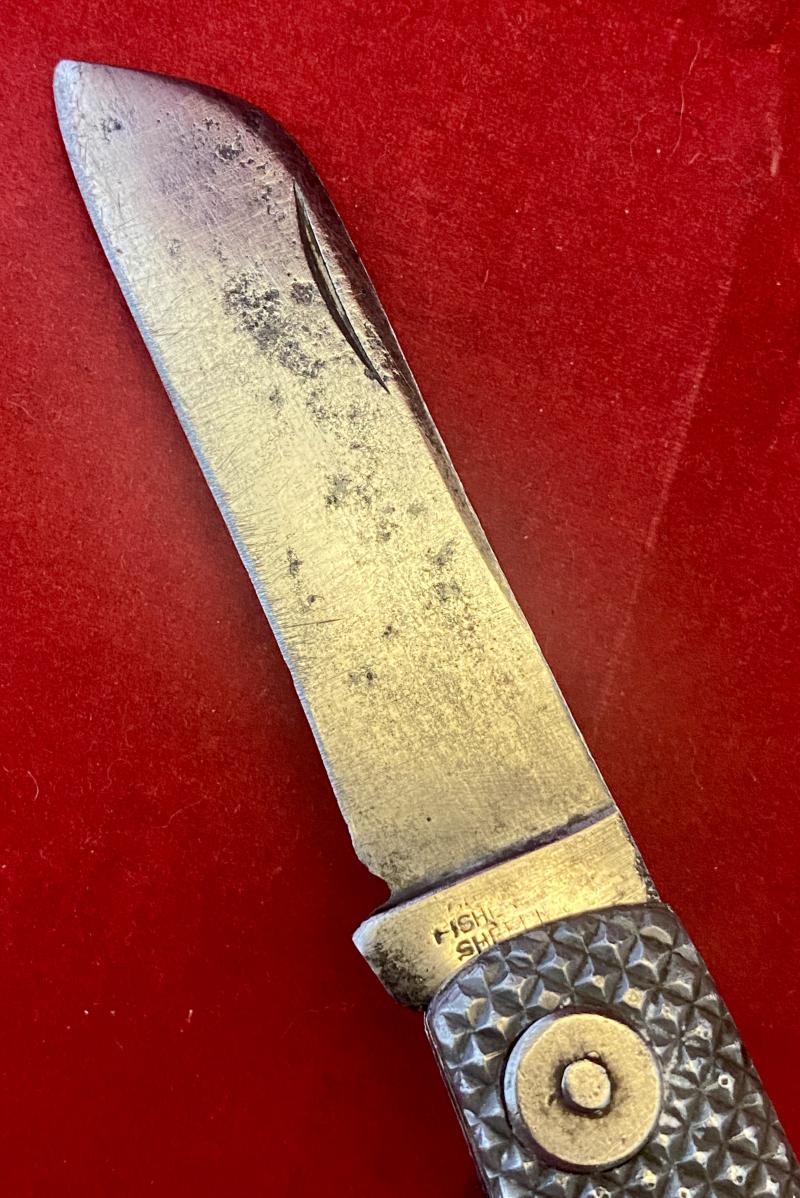
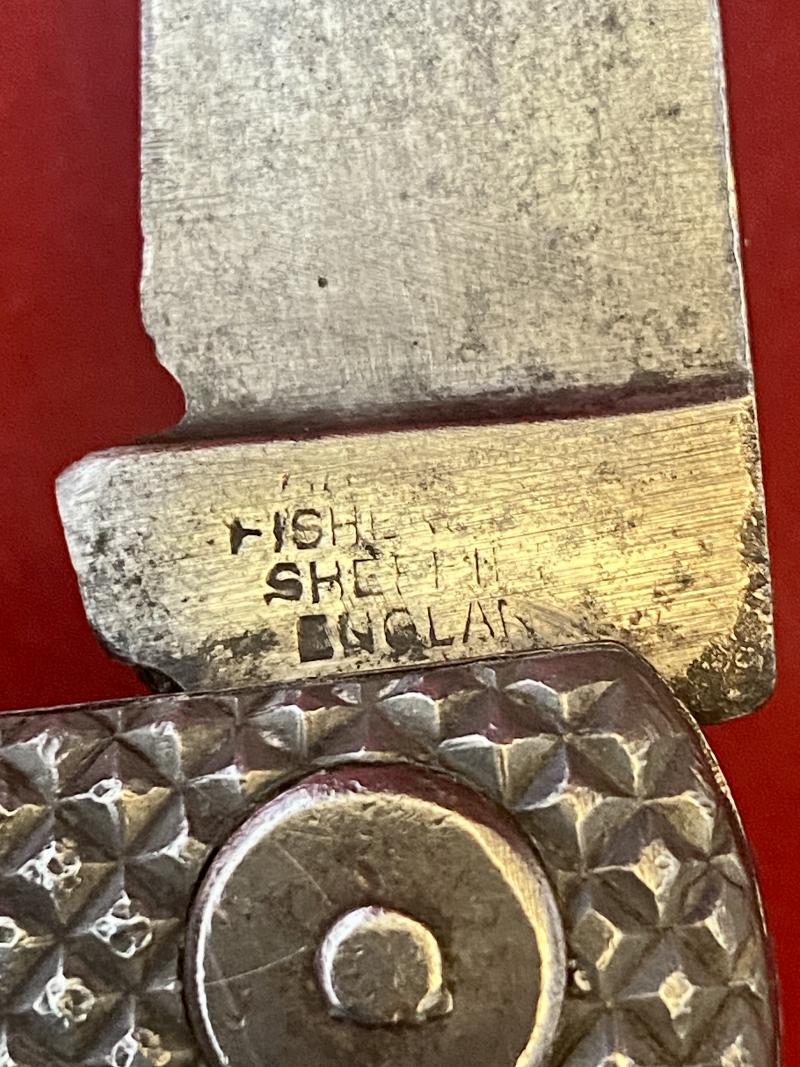
The knife has a 3.25” carbon steel blade, with a 3” straight sharp cutting blade, that is stamped on one side of the ricasso with the maker, “Harrison Fisher & Co Ltd Sheffield”, which is now worn and hard to read.
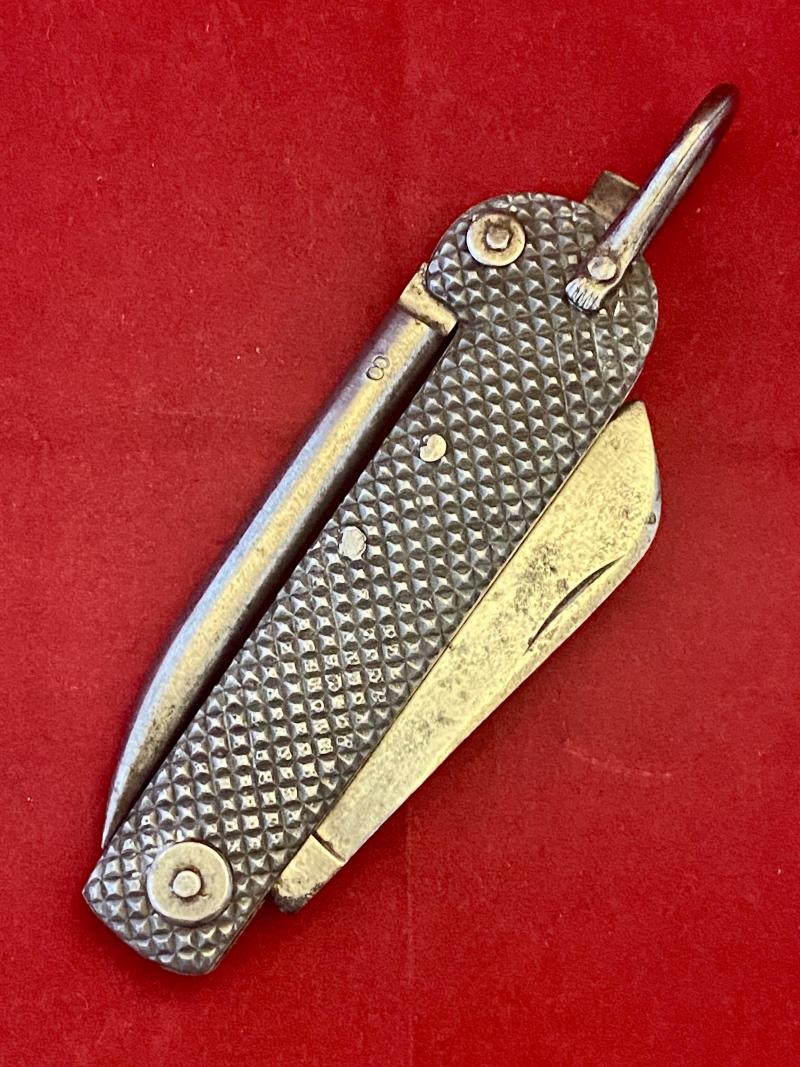
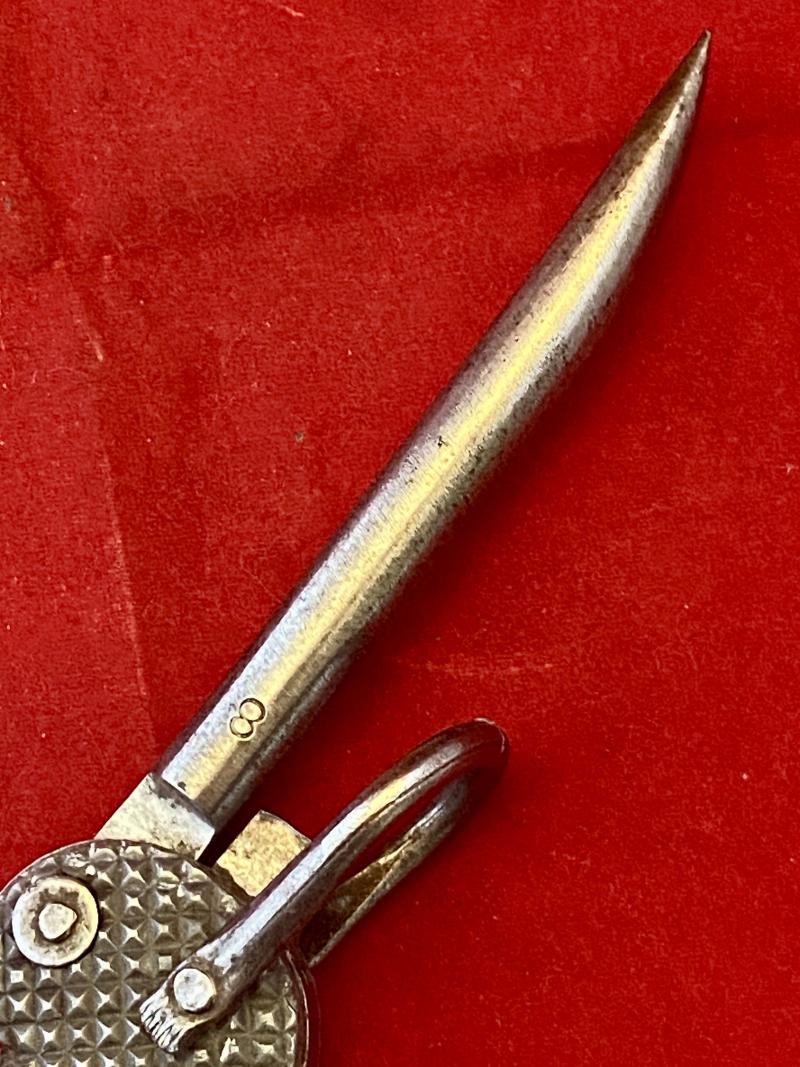
It also has a 3.25” Marlin spike that is stamped with the numbers, 8 and 6.
Harrison Fisher & Co Ltd (Sheffield): A prominent Sheffield manufacturer known for producing pocket knives, cutlery, and specialized tools, including WW2-era British Royal Navy rigger jack knives.
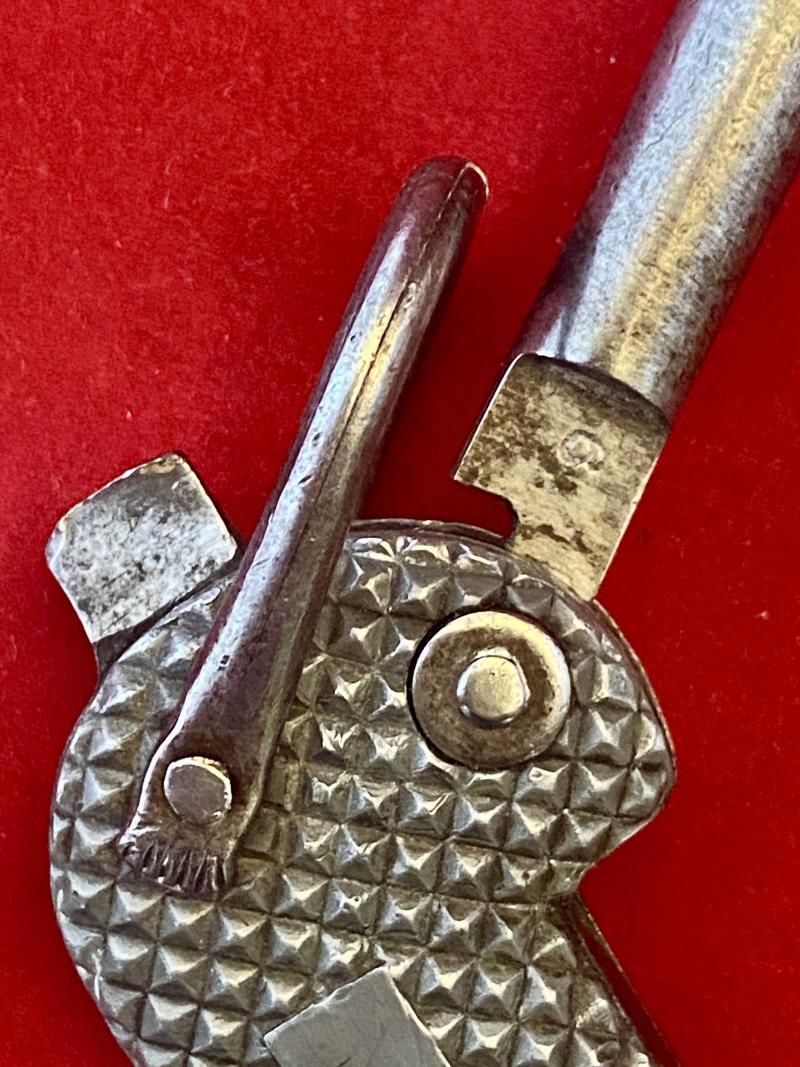
The grip is made from thick chequered alloy scales that are in excellent condition. At the end there is a short flat headed screwdriver blade and a large steel swivel lanyard loop.
The steel blade has a great cutting edge that has been sharpened and the finish now has areas of dark staining and very light pitting, as do the can opener and marlin spike.
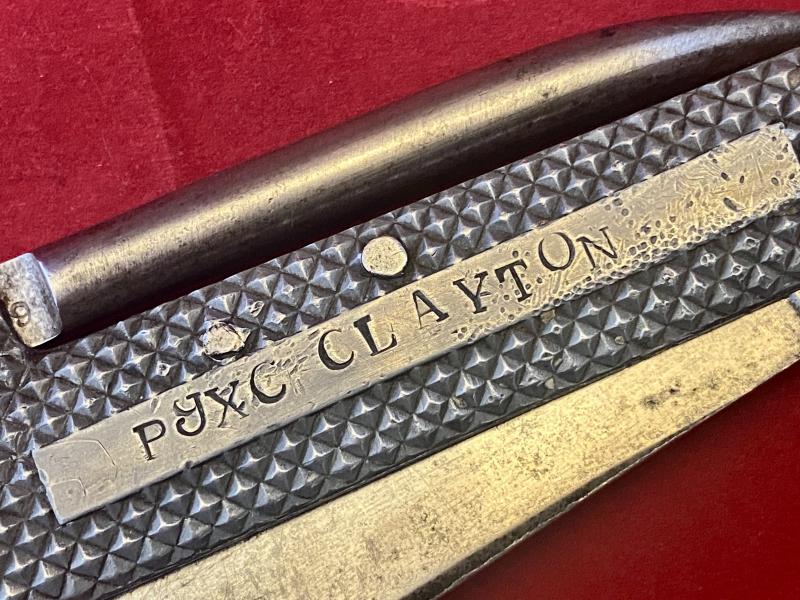
On the front of one of the grip scales there is a flat rectangular section, that has been stamped with the owner’s details, being:
PJX C CLAYTON
My understanding is that:
P = Portsmouth
J = Seamen and comms
X = new pay structure introduced early 1930s
X has nothing to do with hostilities or terms of engagement.
I believe this prefix was used for joiners from 1934 until 1943.
These knives are now collectors’ pieces but still make great sea tools. Apparently, if the blade gets loose, you can pean the rivet snug with a hammer.
The blade cutting edge measures 3” (7.5cm) long and the knife when closed is 4.9” (12.5cm) long, excluding the lanyard ring.
It weighs 240g.
Please see my pictures for the details of the condition, which complement this description.
Please see my TERMS OF BUSINESS regarding Deliver Charges and Insurance regarding additional insurance cover, should you require it, BEFORE the item is dispatched.
The responsibility lies with the customer to check with your Customs restrictions that this item can be imported into your country.
Code: 52243
75.00 GBP