
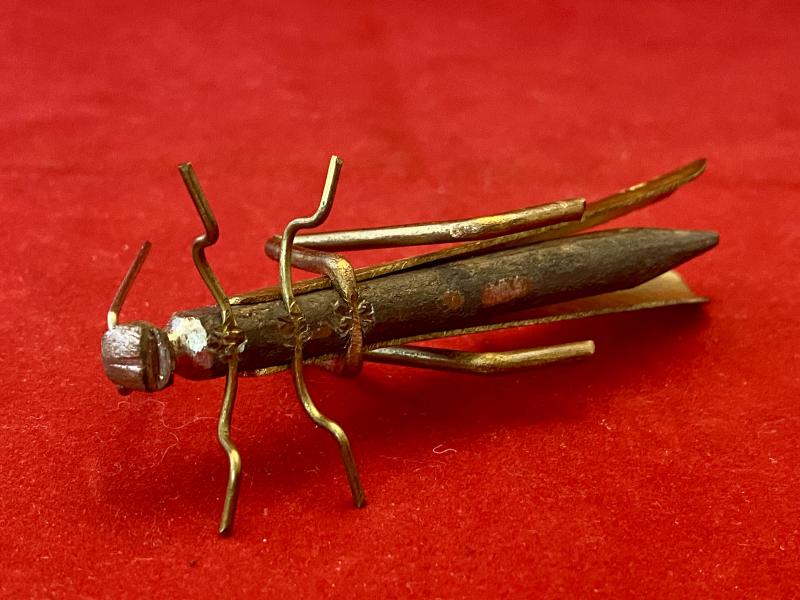
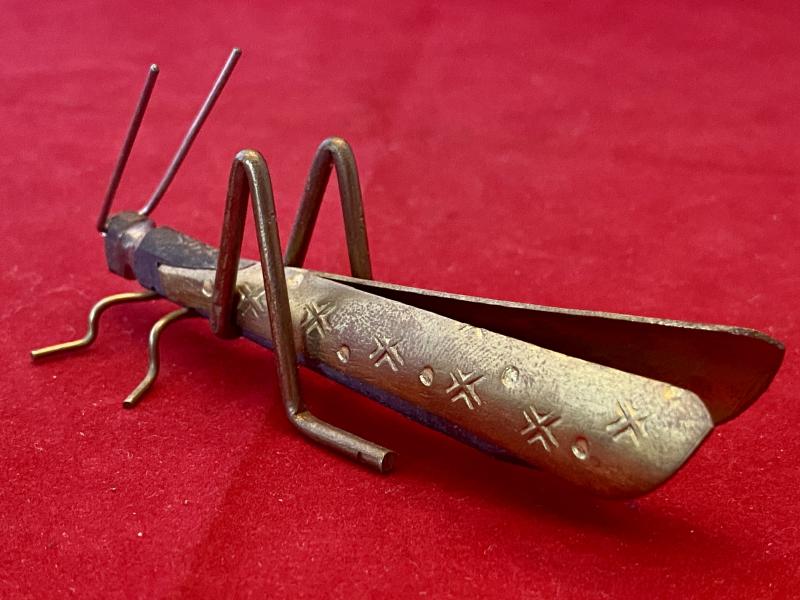
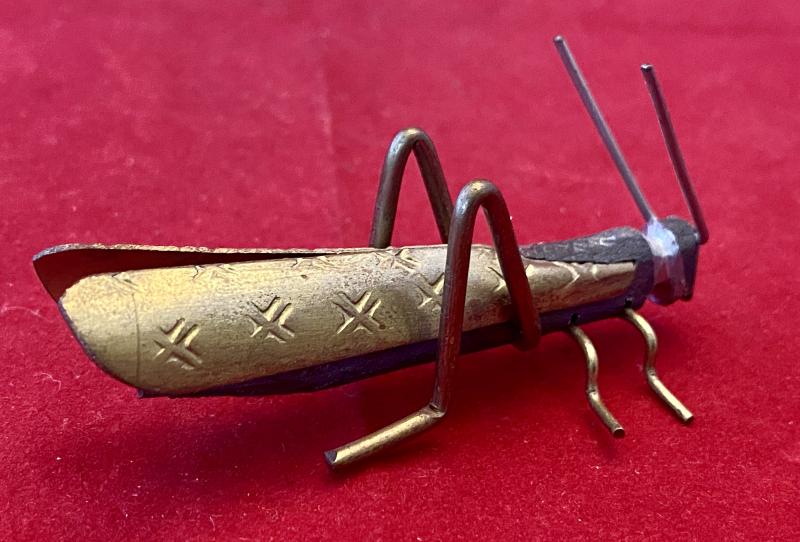
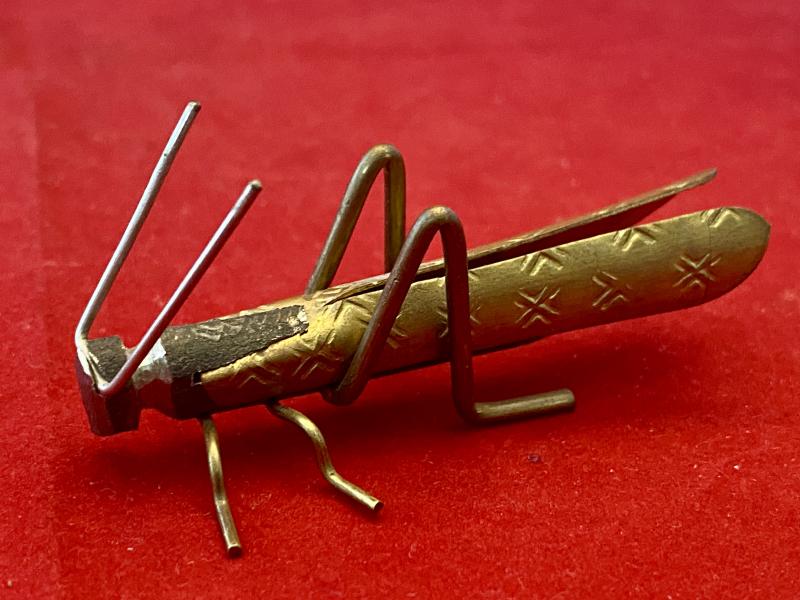
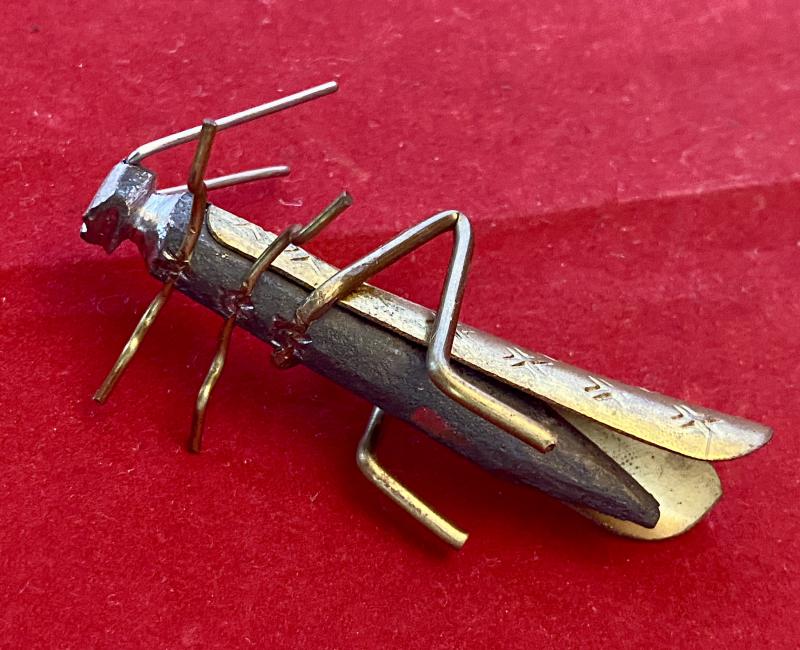
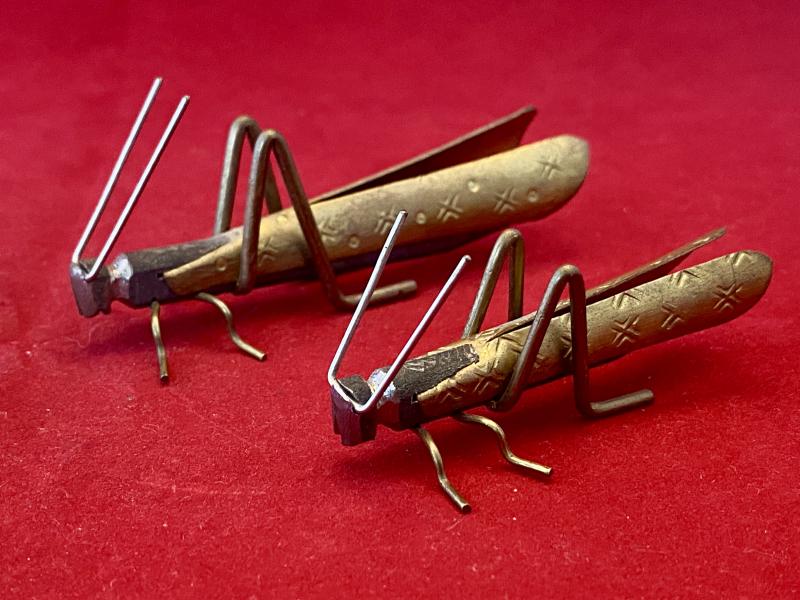
Unusual Pair of WW2 Trench Art Models of Locusts linked to the WW2 American M22 “Locust” Tank
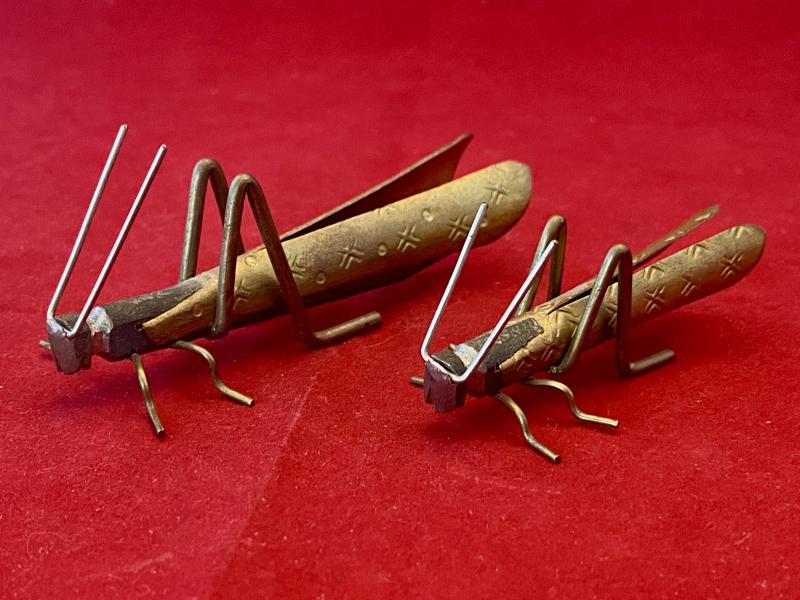
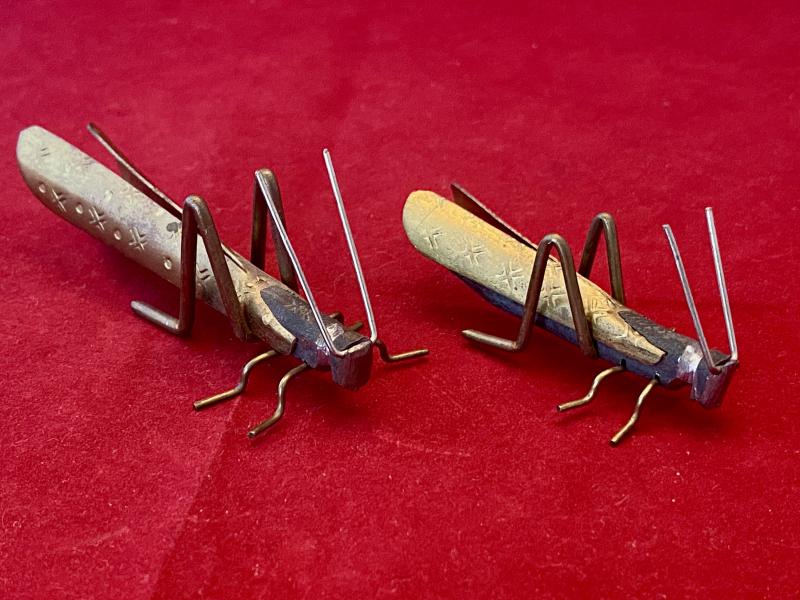
Here on offer is are an unusual and possibly unique pair of WW2 Trench Art models of locusts, linked to the WW2 American M22 “Locust” tank.
I was told (but have no provenance) that they were made by maintenance arm of the British 6th Airbourne Division, that worked on the American M22 “Locust” tanks during WW2.
In early 1941 it was decided by the United States on the need for an airborne tank
Specifications were finalised by May of that year – and a pilot model from Marmon-Herrington – designated the T9 – was delivered by autumn 1941.
After some modifications, they were brought into production and 830 were built by Marmon-Herrington between March 1943 and February 1944. This became the M22, or M22 ‘Locust’ as designated by the British.
Despite Churchill’s order that lend-lease American tanks be named after US – and preferably US Civil War – generals, this was not the case for the M22. The reasons for this lack of adherence to policy are uncertain, there certainly was no ‘General Locust.’
Powered by a Lycoming, six-cylinder, air-cooled petrol engine – the M22 had an excellent top speed.
However, it never saw action with US forces, largely due to their lack of a suitable glider or aircraft to transport it. The only way it could be transported by air was if it was underslung on the C-54 Skymaster plane. For this, the turret needed to be removed and placed in the aircraft to be reassembled on landing, giving the tank very limited tactical value.
The British, however, could carry it in their gliders, notably the Hamilcar glider which was designed to fit the similar Tetrarch tank.
The UK received a large number of M22s from the US and some were landed by Hamilcar glider in the River Rhine crossing operation on 24 March 1945, undertaken by 6th Airborne Division. This was the only time the tank would be used in combat.
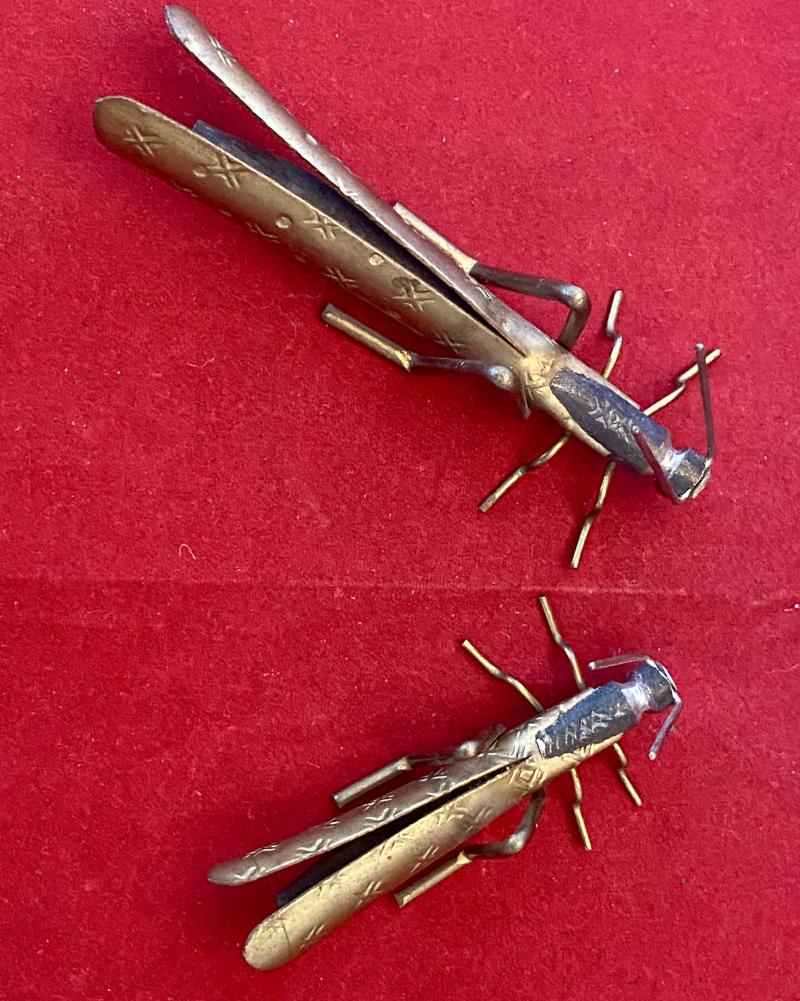
The metal models themselves are slightly different sizes, possibly a male and female version?
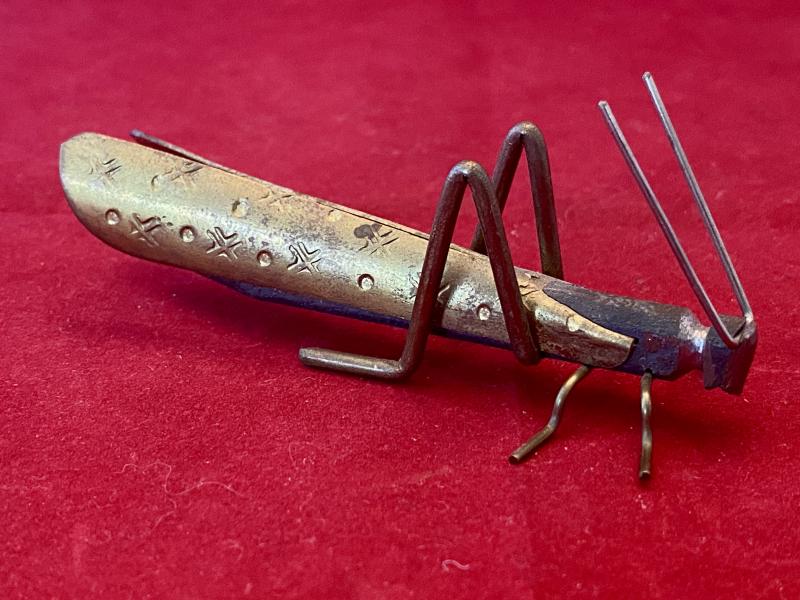
The main body seems to have been made using the tip of a welding rod, then the six legs have been formed from brass wire and rod and the shaped wings from a sheet of cross patterned brass.
The antenna are made from steel wire and they can actually be hinged backwards and forwards.
They are both in excellent condition look to date from the WW2 period, so the story could be true?
The larger locust measures 3.5” (8.9cm) long and the smaller example is 2.5” (6.3cm) long.
Together they weigh 67g.
Please see my pictures for the details of the condition, which complement this description.
Please see my TERMS OF BUSINESS regarding Deliver Charges and Insurance regarding additional insurance cover, should you require it, BEFORE the item is dispatched.
The responsibility lies with the customer to check with your Customs restrictions that this item can be imported into your country.
Code: 52323