Antique Victorian Medical Surgical Blood Letting Fleam Knife with Bone Handle by S & D
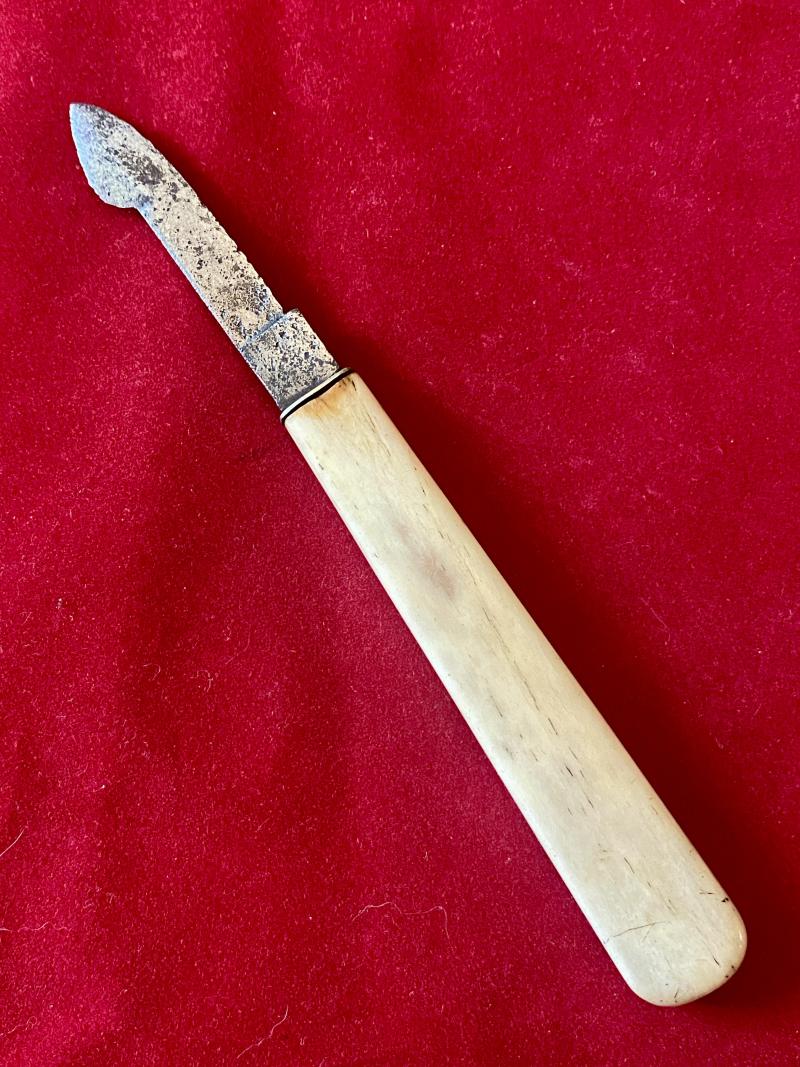
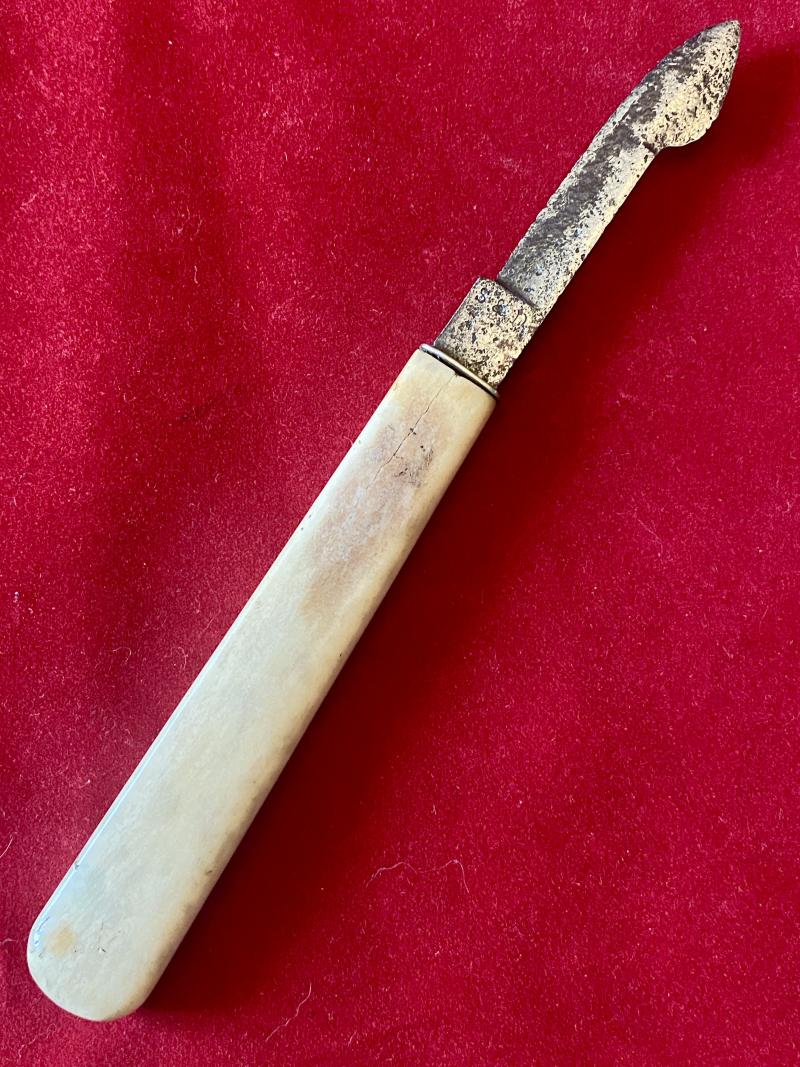
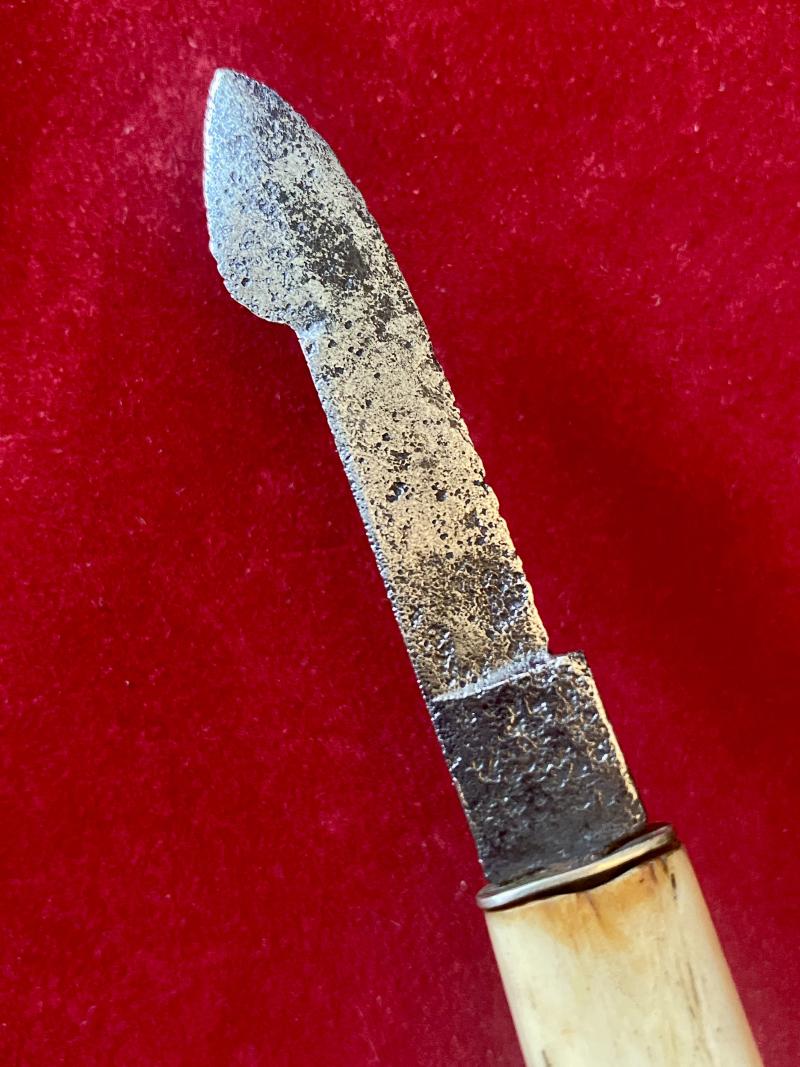
Here on offer is an antique Victorian medical surgical blood letting fleam knife with bone handle by S & D.
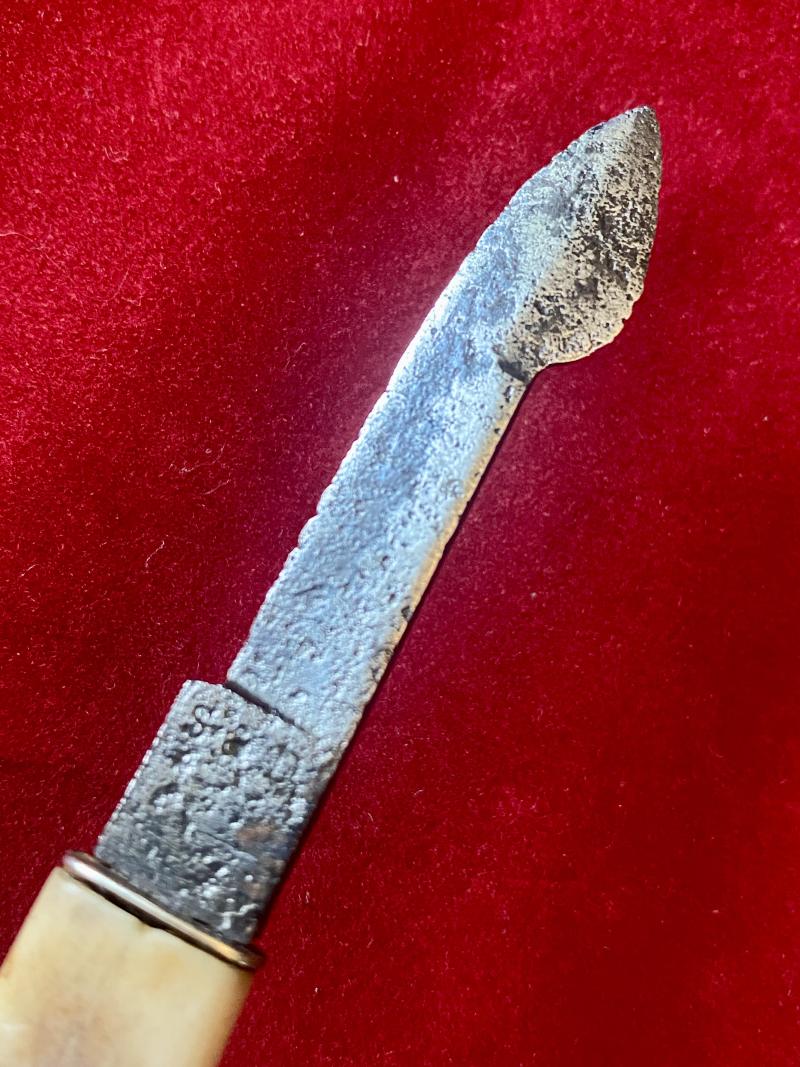
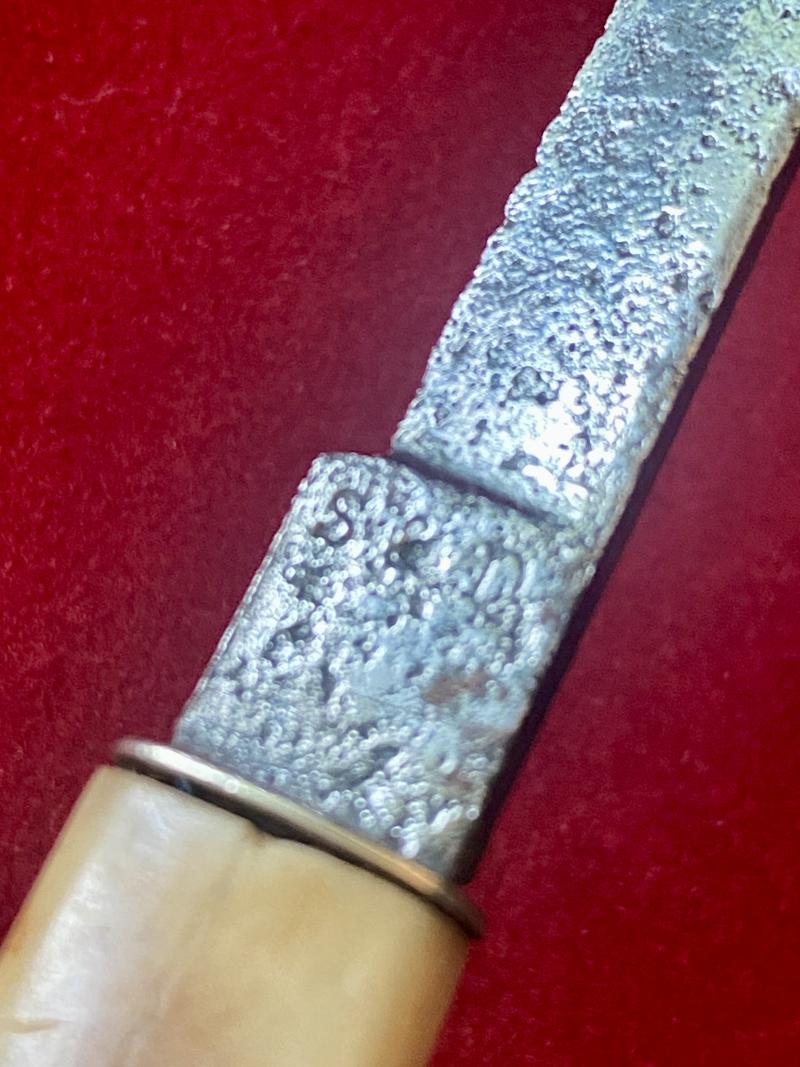
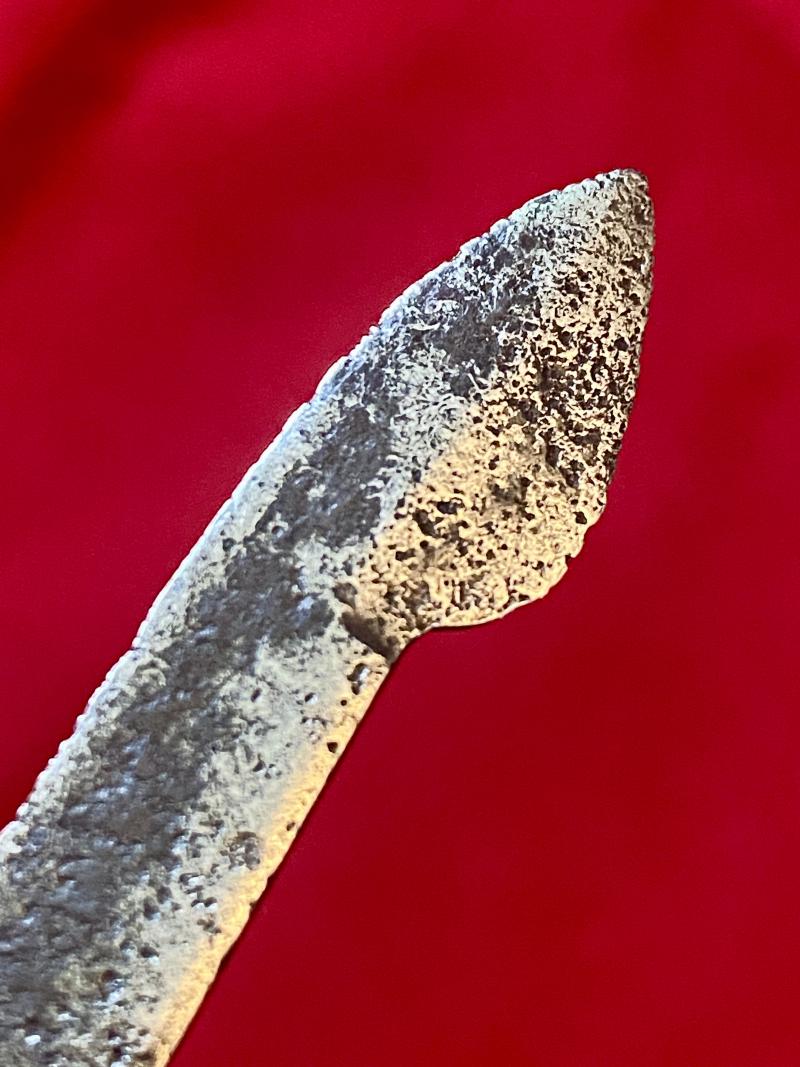
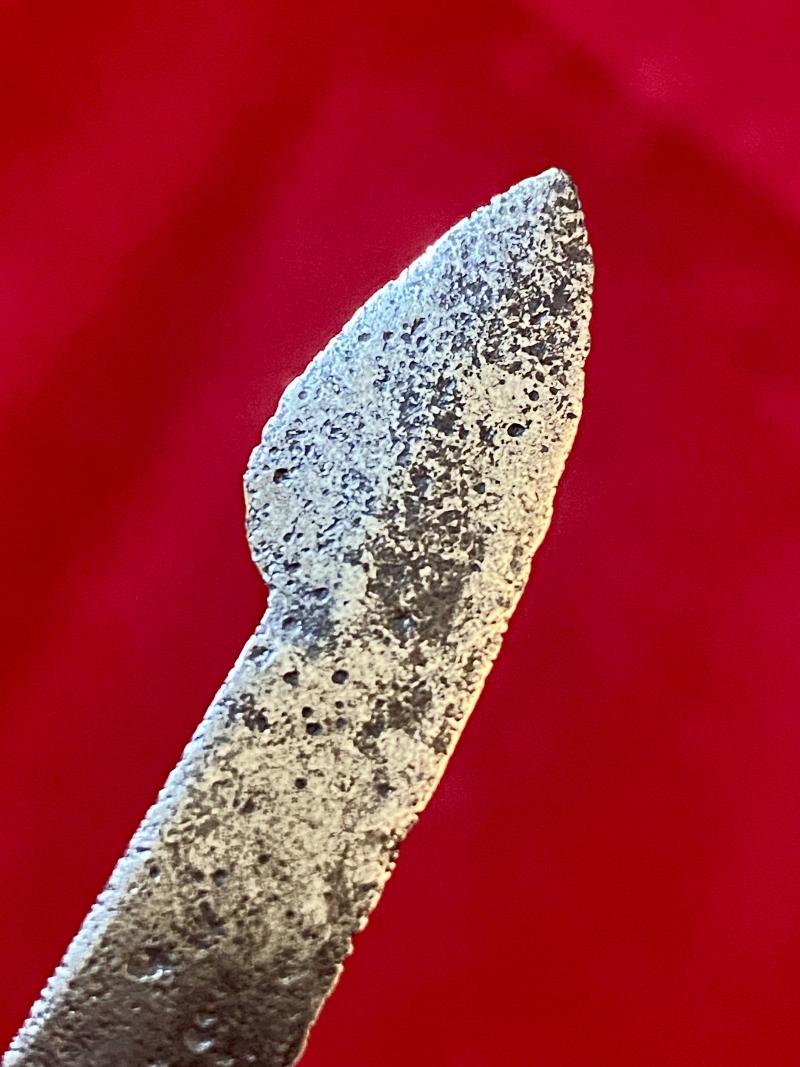
This example has a 2.2” metal blade section that now shows signs of pitting to the finish. On one side of the ricasso it is stamped with the makers mark, being S & D, which I can’t seem to identify.
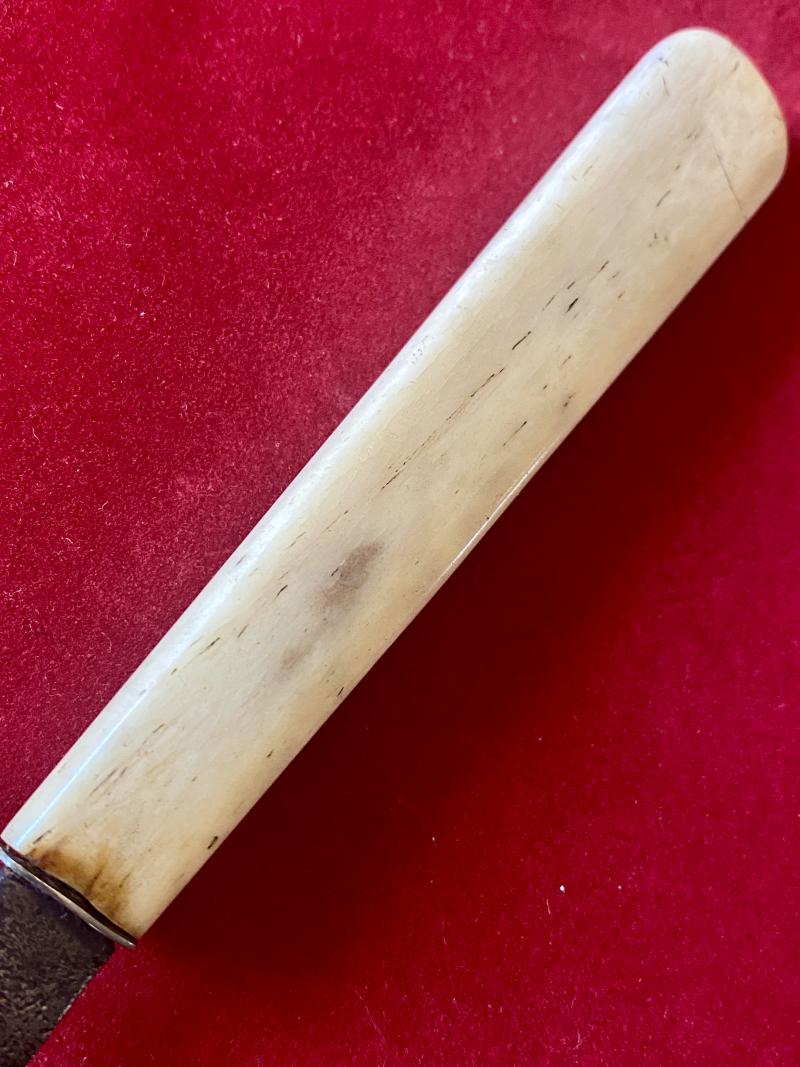
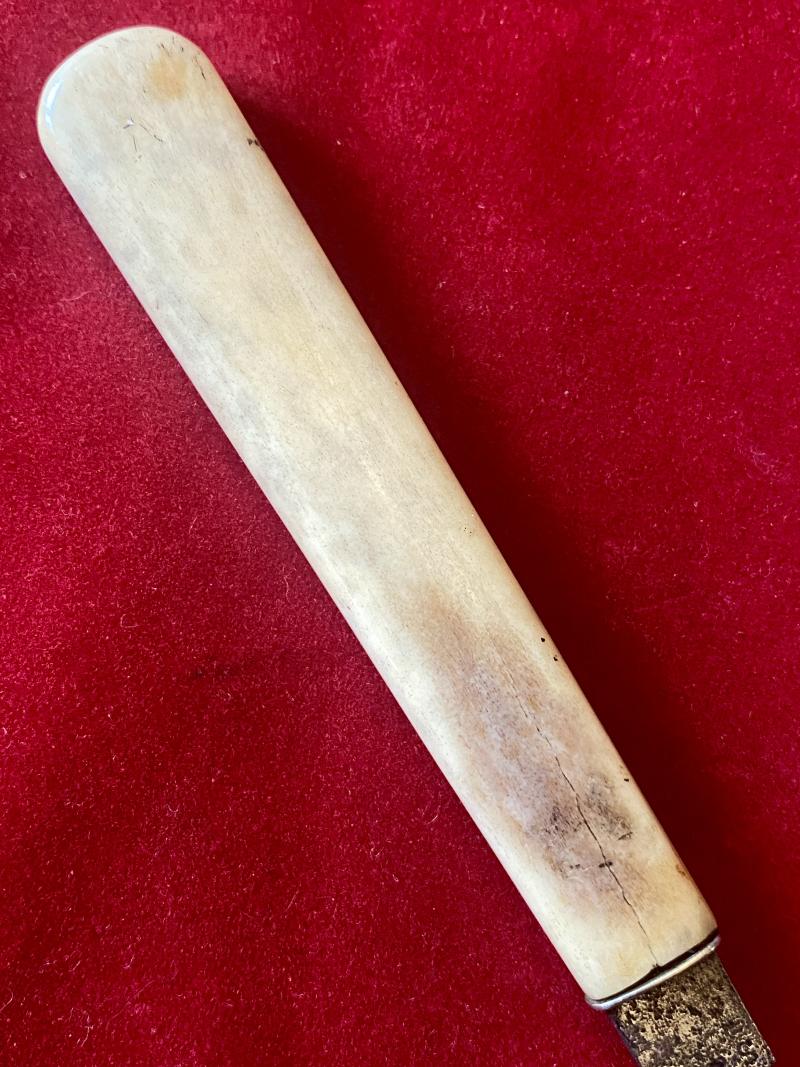
The handle has been made from a smooth solid section of bone, that now shows some staining and has a hard to see hairline crack near the blade on one side.
Some information about Fleams or Phlebetomes (Bleeding Knives)
These medical bloodletting instruments are known as fleams or phlebetomes, from the Greek words “Phlebos,” for blood vessel and “tome” meaning to cut.
This kind of instrument was more often reserved for veterinary use, but the use of fleams on people was not unheard of.
This instrument would be used by placing it over the vein and then striking the fleam with a fleam stick, which was a short wooden club.
This would result in rapid penetration of the vein with minimal risk to the operator and minimal cutting of the patient’s tissue. After the incision was made and the desired amount of blood drained, a pin would be placed through the edges of the cut and then a figure eight of thread was sewn over the pin in order to keep the cut closed.
Bleeding a patient was almost never helpful and served only to make them weaker, yet it was commonly used from as far back as the ancient Egyptians and into the 19th century. One ancient system of thought that coincided with bloodletting was a theory of the four bodily humors: blood, phlegm, black bile, and yellow bile. An imbalance of these “humors” let to the need for bloodletting.
This is still a great example of this style of antique surgical instrument, even with its pitted blade.
The blade section measure 2.2” (5.5cm) long and the hole instrument measures 5.75” (14.6cm).
It weighs 24g.
Please see my pictures for the details of the condition, which complement this description.
Please see my TERMS OF BUSINESS regarding Deliver Charges and Insurance regarding additional insurance cover, should you require it, BEFORE the item is dispatched.
The responsibility lies with the customer to check with your Customs restrictions that this item can be imported into your country.
Code: 52352
20.00 GBP